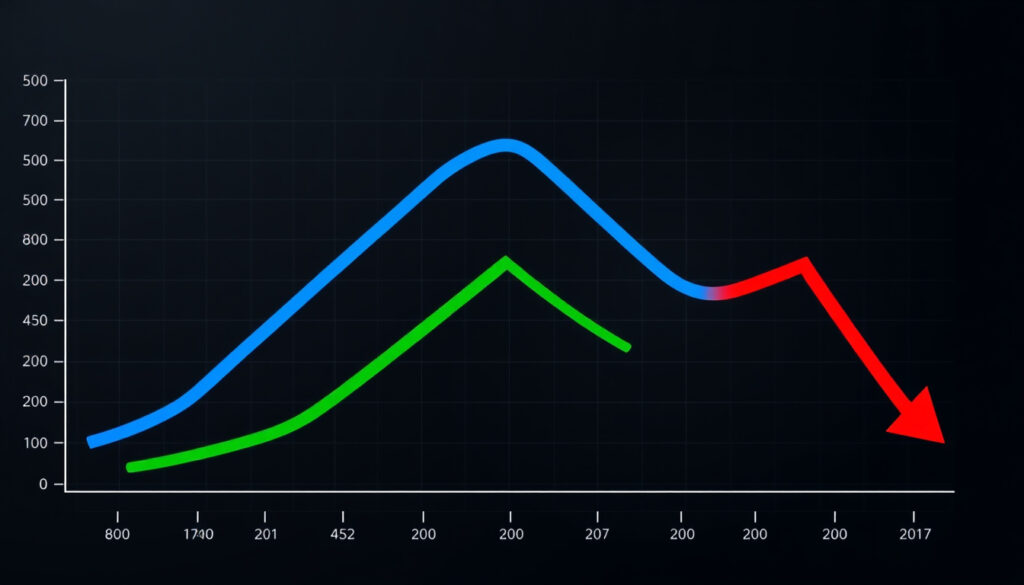
What Is a Yield Curve – Shapes, Inversion and Recession Signals
The yield curve is one of the most closely watched indicators in finance. It plots the interest rates of U.S. Treasury bonds across different maturity periods, from three months to thirty years, and serves as a powerful signal about where the economy might be heading. Investors, policymakers, and analysts study its shape to gauge expectations for growth, inflation, and Federal Reserve actions.
Understanding the yield curve matters whether you are managing a portfolio, making business decisions, or simply trying to interpret economic news. The curve’s shape—normal, flat, inverted, or humped—can indicate everything from healthy expansion to potential recession. This guide explains how the yield curve works, what its various forms mean, and how to interpret the signals it sends.
The information presented here draws on data from the U.S. Treasury, the Federal Reserve, and economic research institutions. It reflects established patterns and historical evidence while acknowledging the limitations inherent in any economic indicator.
What Is a Yield Curve?
A yield curve graphically represents the relationship between bond yields and their maturity dates. When plotted, it shows what investors earn on Treasury securities across various time horizons. The horizontal axis displays maturities—ranging from very short-term instruments like three-month bills to long-term bonds spanning thirty years—while the vertical axis shows the corresponding interest rates or yields.
This visual representation reflects several key economic factors simultaneously. Short-term rates typically respond to the Federal Reserve’s current monetary policy stance, while long-term rates incorporate expectations about future economic growth, inflation, and central bank actions. The interaction between these elements creates the curve’s distinctive shape at any given moment.
Overview of Key Concepts
Plot of Treasury yields against maturity periods
Varies daily based on economic data and Fed policy
Normal, flat, inverted, and humped curves
Inversion has preceded every U.S. recession since 1976
The yield curve serves multiple purposes for different audiences. Economists use it to assess the overall health of the financial system and predict turning points in the business cycle. Bond traders make investment decisions based on curve movements and anticipated shifts. The Federal Reserve itself monitors the curve when formulating monetary policy, as it provides real-time feedback on market expectations.
The relationship between short and long-term rates reveals how participants in the bond market view future economic conditions. When investors demand higher compensation for holding long-term securities, the curve slopes upward. When they expect rates to fall or growth to weaken, the curve may flatten or invert. These subtle shifts can signal changes that affect mortgages, corporate borrowing costs, and consumer spending across the entire economy.
Key Insights About the Yield Curve
- An inverted yield curve has preceded every U.S. recession since 1955, though timing varies from six months to two years
- The 10-year minus 2-year Treasury spread is the most watched metric for recession signaling
- Federal Reserve policy directly influences short-term rates, while market forces dominate the long end
- Term premium—the extra compensation investors demand for long-term uncertainty—affects curve shape
- A steepening curve from flat or inverted positions historically indicates economic improvement
- Global factors including foreign demand for U.S. Treasuries can influence long-term yields
- The curve does not cause recessions; it reflects conditions that may lead to them
Traders and analysts track specific maturity points when examining the yield curve. The three-month bill, two-year note, five-year note, ten-year bond, and thirty-year bond represent key reference points. The spread between any two maturities can signal different aspects of market sentiment. Most attention focuses on the relationship between the two-year and ten-year yields, as this spread has demonstrated consistent predictive value for economic downturns.
The most widely monitored yield spread is the 10-year Treasury yield minus the 2-year Treasury yield. When this value turns negative, the curve is considered inverted. The New York Federal Reserve uses this spread in models that estimate recession probability over the following twelve months. Current rates and historical spreads are available through the Federal Reserve Economic Data database, where users can track the T10Y2Y series in real time.
| Maturity | Typical Role | Influenced By | Yield Curve Importance |
|---|---|---|---|
| 3-Month | Short-term benchmark | Federal Reserve policy decisions | Immediate monetary signal |
| 2-Year | Recession predictor | Fed expectations and near-term outlook | Key inversion indicator |
| 5-Year | Mid-cycle indicator | Medium-term growth and inflation | Transition zone in curve |
| 10-Year | Benchmark for mortgages and corporate bonds | Long-term inflation and growth expectations | Most watched for recession signals |
| 30-Year | Longest duration Treasury | Demographic trends, fiscal policy expectations | Reflects long-term economic confidence |
| 10y2y Spread | Recession probability indicator | Combined Fed policy and market expectations | Primary monitoring metric |
Common Yield Curve Shapes: Normal, Inverted, Flat, and Humped
The yield curve can assume several distinct configurations, each carrying different implications for the economic outlook. Market participants have named the primary configurations based on their visual appearance and what they historically suggest about future conditions. Understanding these shapes helps investors and analysts interpret current conditions and anticipate potential shifts.
Normal (Upward Sloping) Curve
A normal yield curve slopes upward from left to right, meaning short-term securities carry lower yields than long-term ones. This configuration reflects the reasonable expectation that investors require compensation for tying up their money over extended periods. The longer the maturity, the greater the uncertainty about future economic conditions, inflation, and other factors that could affect returns.
This shape typically emerges during periods of economic expansion when growth appears solid and inflation expectations remain moderate. Under such circumstances, investors anticipate that the Federal Reserve will raise short-term rates gradually to keep the economy from overheating. The upward slope rewards long-term commitment while signaling confidence in sustained growth.
Inverted (Downward Sloping) Curve
An inverted curve occurs when short-term yields exceed long-term yields, creating a downward slope from left to right. This configuration is relatively uncommon and draws significant attention precisely because it has preceded every U.S. recession since 1976. The historical pattern suggests that when investors expect future rate cuts—typically because they anticipate economic weakening—they lock in long-term rates that appear attractive relative to current short-term yields.
The signal is not immediate. While inversion reliably precedes recessions, the lead time varies considerably. Some inversions preceded downturns by six months; others occurred more than a year before economic contraction began. The 2022-2023 period illustrates this complexity: the curve inverted in mid-2022, yet economic activity remained resilient through early 2024, and equity markets actually gained ground even as the inversion persisted.
Research from the Brookings Institution documents that yield curve inversions preceded recessions in the 1980s, 1990s, 2001, and 2008. Each case showed the 10-year minus 2-year spread turning negative before economic contraction followed. However, the mechanism behind the predictive power remains debated among economists. The relationship appears reliable but not causal—the curve reflects conditions that may lead to recession rather than directly causing economic decline.
Flat Curve
A flat yield curve shows little difference between short-term and long-term rates. Yields cluster together across maturities, creating a nearly horizontal line. This configuration often appears during transition periods when the economy is shifting between expansion and slowdown, or vice versa.
Central bank actions frequently create flat curves. When the Federal Reserve raises short-term rates aggressively to combat inflation, the short end of the curve rises sharply. If long-term investors remain confident that such hikes will prove temporary and that inflation will moderate, long-term rates may stay relatively low. The resulting compression flattens the curve and often signals uncertainty about the economic path ahead.
Humped (Kinked) Curve
A humped curve rises at first, peaks at intermediate maturities—typically five to ten years—before falling slightly at the longest durations. This configuration is less common and generally considered less meaningful for economic forecasting.
Technical factors often drive humped configurations. Supply-demand imbalances in specific maturity segments, regulatory requirements affecting certain institutional investors, or unusual positioning by large traders can create temporary kinks in the curve. Because these factors tend to be transitory, analysts usually treat humped curves with more caution than normal, flat, or inverted configurations.
How to Read and Interpret a Yield Curve
Reading a yield curve involves understanding both its visual representation and the numerical relationships between different maturity points. The chart plots yields on the vertical axis against maturity lengths on the horizontal axis. Most analysts use a logarithmic scale for the horizontal axis to accommodate the wide range of maturities while maintaining visual clarity.
The 10-Year Minus 2-Year Spread
The spread between the 10-year and 2-year Treasury yields serves as the primary focus for most market analysts. This particular spread has demonstrated the most consistent relationship with recession outcomes. When the 10-year yield exceeds the 2-year yield, the spread is positive and the curve slopes upward. When the 2-year yield rises above the 10-year yield, the spread turns negative, indicating inversion.
The U.S. Treasury publishes daily yield data that allows anyone to calculate these spreads in real time. A spread above one percent generally suggests healthy economic conditions with room for continued expansion. A spread near zero indicates caution, while a negative spread historically warrants serious attention to recession risks.
What Different Spreads Tell Us
Different spread relationships provide different insights. The gap between 3-month and 10-year yields captures longer-term economic expectations and responds to significant market events. The 2-year to 10-year spread, as noted, serves as the primary recession predictor. Analysts also watch the relationship between 3-month bills and 2-year notes to understand near-term Fed expectations versus market pricing.
When spreads narrow, it often signals that investors anticipate Fed policy changes or expect economic conditions to evolve. Rapidly narrowing spreads may indicate growing concerns about slowdown, while widening spreads suggest improving confidence or expectations of stronger growth ahead. The direction of change often matters as much as the absolute level.
The yield curve provides probabilistic signals, not certainties. An inverted curve increases recession probability but does not guarantee economic contraction within any specific timeframe. The relationship has held consistently since 1976, but economists note that low or negative term premiums can flatten curves without recession following. Individual investors should consider curve signals alongside other economic indicators rather than treating inversion as an automatic forecast.
Using FRED Data
The Federal Reserve Economic Data (FRED) database maintained by the St. Louis Fed provides comprehensive access to yield curve data. Users can track the T10Y2Y series—which directly displays the 10-year minus 2-year spread—along with individual maturity yields and historical data going back decades. This resource enables anyone to monitor current conditions and compare them to historical patterns.
The New York Fed publishes recession probability models that incorporate yield curve data alongside other economic indicators. These models do not predict recessions with certainty but provide quantitative assessments of risk based on historical relationships. Following these resources helps maintain perspective on what the curve signals mean in context.
Yield Curve Inversion: Causes and Economic Signals
Yield curve inversion occurs when short-term interest rates rise above long-term rates, creating a downward-sloping curve. This configuration contradicts the normal expectation that longer maturities should carry higher yields, and its appearance triggers considerable concern among economists and investors. Understanding why inversions occur helps clarify what they might mean for future economic conditions.
What Causes Inversion
Several interconnected factors can push the yield curve toward inversion. The expectations theory suggests that curves invert when investors expect future short-term rates to fall—typically because of anticipated economic weakness or central bank responses to slowing growth. If investors believe the Federal Reserve will need to cut rates to stimulate a weakening economy, they lock in current long-term rates that appear favorable relative to expected future short-term rates.
The term premium—the extra compensation investors demand for holding longer-duration securities—also influences curve shape. When term premiums are low or negative, long-term yields remain suppressed even if short-term rates rise. Low term premiums may reflect reduced uncertainty about long-term inflation or substantial demand for long Treasuries from investors seeking safety. Such conditions can flatten or invert curves without necessarily signaling imminent recession.
Federal Reserve policy actions directly affect short-term rates through the federal funds rate. When the Fed raises rates aggressively—as it did in 2022 and 2023 to combat inflation—short-term yields rise correspondingly. If long-term investors remain confident that such hikes will prove temporary and that inflation will eventually moderate, long-term yields may not rise proportionally, creating or deepening inversion.
The Recession Signal
An inverted yield curve has preceded every U.S. recession since 1976, according to research from multiple sources including the Brookings Institution. This track record makes the inversion signal among the most reliable economic indicators available. The typical lead time between curve inversion and recession onset ranges from twelve to eighteen months, though the timing has varied considerably across different economic cycles.
The predictive mechanism operates probabilistically rather than deterministically. Inversion increases recession probability significantly, but the relationship reflects historical correlation rather than causal certainty. Other factors—including the magnitude and duration of inversion, accompanying economic data, and global conditions—influence whether recession ultimately materializes and when it might begin.
The inversion of 2022 illustrates these complexities. The curve inverted in mid-2022 as the Federal Reserve raised rates sharply to address inflation that had reached four-decade highs. Recession probability estimates climbed toward forty percent based on New York Fed models. Yet through early 2024, the U.S. economy demonstrated surprising resilience. Employment remained strong, consumer spending held up, and the S&P 500 index actually gained substantially despite persistent inversion. Some economists suggested that different mechanisms might be operating, while others maintained that recession would eventually arrive despite the delayed response.
Why Signals Sometimes Fail
Not every inversion produces recession, and not every recession follows observable inversion. The relationship has remained consistent historically, yet market conditions and structural factors occasionally produce curves that invert without economic contraction following. Understanding these exceptions helps prevent overinterpretation of any single signal.
Low or negative term premiums contribute to false signals by suppressing long-term yields independently of economic conditions. When investors flock to long Treasuries seeking safety—particularly during periods of international uncertainty—elevated demand pushes long yields down even if short-term conditions suggest otherwise. The resulting inversion reflects technical factors rather than recession probability.
Yield Curve Through Recent History
The yield curve has provided signals throughout several significant economic periods. Tracking how the curve behaved before and during past recessions helps contextualize current conditions and understand the indicator’s track record.
- 1969: One of the earliest documented inversions preceded the recession of 1970. Data quality before 1976 is less reliable due to regulatory distortions from Regulation Q, which capped deposit interest rates.
- 1980-1982: Multiple inversions accompanied the severe recession that followed Federal Reserve Chairman Paul Volcker’s aggressive anti-inflation campaign. The curve inverted repeatedly as rates surged to historic levels.
- 1990-1991: Inversion preceded the recession associated with the Gulf War and consumer confidence decline. The signal appeared approximately fourteen months before economic contraction began.
- 2001: The dot-com bubble collapse brought inversion before the recession of 2001. Technology sector excess and the September 11 attacks compounded economic stress.
- 2006-2007: The curve inverted before the financial crisis and Great Recession. This signal received considerable attention at the time but did not prevent the severity of the downturn that followed.
- 2019: Brief inversion preceded the pandemic recession of 2020. The signal appeared just before COVID-19 disrupted global economic activity in ways that traditional indicators could not anticipate.
- 2022-2023: Extended inversion during Federal Reserve rate-hiking cycle produced elevated recession probability estimates while the economy continued growing, challenging interpretations of the signal’s meaning.
Recent history demonstrates both the curve’s predictive value and its limitations. Inversions reliably preceded recessions, but the two-year inversion from 2022 to 2024 tested assumptions about timing and certainty. Economists who study the yield curve acknowledge this complexity, noting that the indicator identifies conditions associated with recession risk rather than guaranteeing economic contraction within any specific timeframe.
What We Know and What Remains Uncertain
The yield curve has demonstrated consistent predictive value for U.S. recessions, yet several aspects remain subjects of ongoing research and debate. Understanding both what is established and what remains unclear helps contextualize the indicator’s usefulness and limitations.
Established Understanding
- Inversions have preceded every U.S. recession since 1976
- The 10-year minus 2-year spread is the most reliable recession signal
- Federal Reserve policy directly influences short-term rates
- Long-term rates incorporate inflation and growth expectations
- Term premium affects curve shape independently of economic conditions
- Steepening from inversion often signals improving conditions
- The curve reflects market expectations rather than causing outcomes
Remaining Uncertainty
- Exact timing between inversion and recession varies widely
- Mechanisms behind predictive power are not fully understood
- Low term premium environments may produce false signals
- How global factors affect U.S. curve signals remains unclear
- Whether recent prolonged inversions signal different dynamics
- Optimal response strategies for investors during inversion
- International curve relationships and their implications
The relationship between yield curve signals and actual economic outcomes involves probability rather than certainty. Researchers continue studying why the indicator works, what factors might cause it to fail, and how investors should interpret signals given the variable timing between inversion and recession. These questions reflect ongoing academic and professional debate rather than settled conclusions.
The Yield Curve in Economic Context
The yield curve does not operate in isolation. Multiple economic factors influence its shape and interpretation, and understanding these relationships helps place curve signals in proper perspective. Federal Reserve policy represents the most direct influence on short-term rates, while long-term rates reflect expectations about future economic conditions, inflation, and international capital flows.
When the Fed raises the federal funds rate to combat inflation, short-term Treasury yields typically rise in lockstep. The effect on long-term rates is less predictable, as investors may anticipate that rate hikes will prove temporary or that economic slowdown will eventually require rate cuts. This divergence creates the flattening and inversion patterns that draw attention. As noted in analysis from investment management firms, the curve essentially summarizes market participants’ collective views on future economic conditions and central bank responses.
Global capital flows affect long-term yields in ways that complicate domestic interpretation. Foreign investors purchasing U.S. Treasuries influence yields based on conditions in their home countries as well as relative value assessments. During periods of European or Asian economic stress, demand for the relative safety of U.S. Treasuries can push long-term yields lower than domestic economic conditions alone would suggest. This international dimension means the U.S. yield curve sometimes reflects global conditions as much as domestic ones.
Market participants continuously incorporate new information into their expectations, which shifts the curve in response to economic data releases, central bank communications, and geopolitical events. This responsiveness makes the yield curve a dynamic indicator that evolves daily rather than a static signal that remains fixed once observed. Investors and analysts who track the curve regularly understand its continuous nature rather than treating any single observation as definitive.
The yield curve is essentially a summary of what bond investors collectively believe about future economic growth, inflation, and Federal Reserve policy. When you hear that the curve has inverted, it means short-term rates are higher than long-term rates—a configuration that has historically signaled concern about the economic outlook ahead.
— Federal Reserve and Treasury educational resources
Key Takeaways
The yield curve remains one of the most watched economic indicators precisely because it synthesizes complex information into a visual format that reveals market expectations about future conditions. Its consistent track record as a recession predictor gives it credibility, while the timing variability and occasional false signals remind users that it provides probabilistic guidance rather than certain forecasts.
Understanding the curve’s shapes—normal, flat, inverted, and humped—helps interpret what current conditions suggest about the economic outlook. The 10-year minus 2-year spread serves as the primary focus for recession monitoring, with negative values warranting attention and persistent inversions historically associated with elevated economic risk. Monitoring this spread through resources like the Federal Reserve’s economic data databases helps maintain awareness of current conditions.
For those interested in related economic indicators, the relationship between employment trends and consumer spending patterns often provides additional context for interpreting yield curve signals. Similarly, tracking how corporate bond markets respond to Treasury curve movements can reveal how investors price economic risk across different segments of the bond market.
Ultimately, the yield curve works best as one component of broader economic analysis rather than a standalone indicator. Its historical reliability for identifying recession risk makes it valuable, while its timing variability argues against overreliance on any single observation. Regular monitoring, combined with attention to other economic indicators, helps investors and analysts make informed decisions based on the signals the curve provides.
Frequently Asked Questions
What does it mean when the yield curve inverts?
When the yield curve inverts, short-term Treasury yields rise above long-term yields. This downward slope has historically preceded recessions, as it suggests investors expect future rate cuts due to anticipated economic weakening or low inflation.
How often does an inverted yield curve correctly predict recession?
Since 1976, every U.S. recession has been preceded by yield curve inversion. However, the timing varies considerably—lead times have ranged from six months to two years, and the indicator does not guarantee recession within any specific period.
Which yield spread matters most for recession prediction?
The 10-year minus 2-year Treasury yield spread is the most widely monitored metric for recession prediction. When this spread turns negative, recession probability estimates increase significantly based on historical relationships.
Can the yield curve signal economic improvement?
Yes. A steepening curve—where the spread between long and short yields increases—historically signals improving economic conditions. When an inverted curve begins steepening, it often indicates that recession risks are receding and growth may be stabilizing.
What causes a flat yield curve?
A flat curve typically results from Federal Reserve rate hikes that push short-term yields higher while long-term rates remain suppressed by expectations of future rate cuts, low inflation, or substantial demand for long Treasuries from investors seeking safety.
Where can I find current yield curve data?
Current U.S. Treasury yield data is available daily from the U.S. Treasury website and the Federal Reserve Economic Data (FRED) database. The FRED T10Y2Y series directly displays the 10-year minus 2-year spread for monitoring recession signals.
Does the yield curve cause recessions?
No. The yield curve reflects economic conditions and market expectations rather than causing them. Inversion correlates with recession because both result from similar underlying factors—tight monetary policy, slowing growth, or deflation concerns—rather than the curve directly producing economic contraction.
More related posts
 Best Self-Help Books: Top 10 Recommended by Experts
 Today’s Horse Racing Results: UK, Ireland & Fast Updates
 Best Apps for Productivity Tips: The Top 10 in 2026
 New Penneys Store Main Street Cavan: Spring 2028 Opening
 40 Inches in cm: Conversion, Waist Size, TV Dimensions & More
 Muslim Sisters of Eire: What They Do and How to Volunteer
 UK 11 in EU: Your Complete Shoe Size Conversion Guide
 Borderline Personality Disorder Symptoms: 9 Key Signs