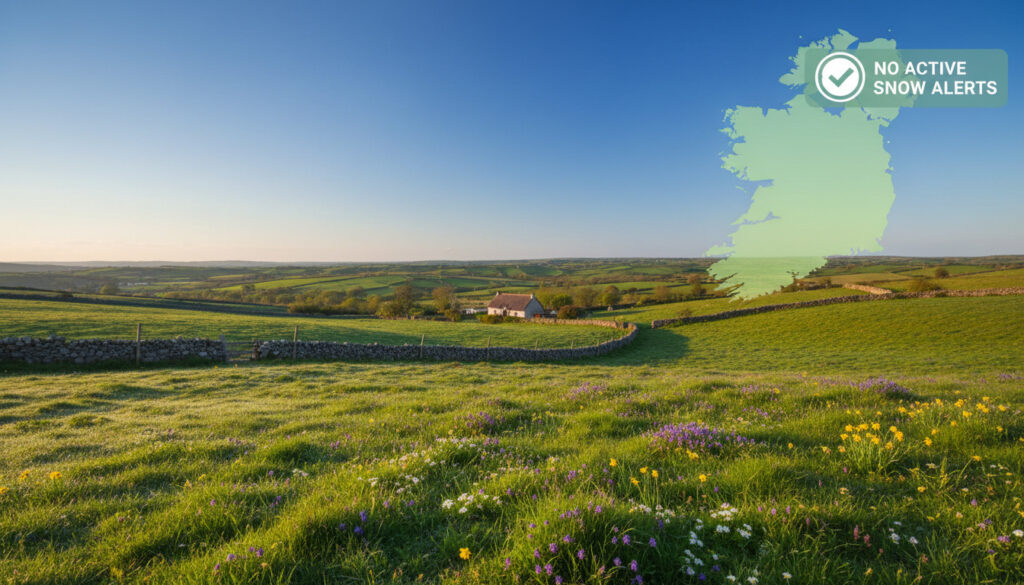
Snow Weather Warning Ireland – No Active Alerts April 2026
As of April 6, 2026, Met Éireann has issued no active snow warnings for Ireland. All weather alerts have expired, with the most recent Status Yellow snow and ice warning concluding on March 13 following a 12-hour period of sleet and snow accumulations across 11 counties.
The national meteorological service currently lists only small craft warnings for coastal waters, with south or southeast winds reaching force 6 or higher. No land-based weather warnings remain in operation nationwide.
The most recent significant winter weather event occurred in mid-March, when counties across Munster, Connacht, and Leinster experienced freezing conditions that disrupted transport networks and created hazardous road conditions.
Is There a Current Snow Warning in Ireland?
- No land-based warnings active as of April 6, 2026, according to Met Éireann
- Most recent warning expired at 9am on March 13 after 12-hour duration
- Previous alert covered Cork, Kerry, Limerick, Tipperary, Waterford, Donegal, Galway, Leitrim, Mayo, Sligo, and Wicklow
- Temperatures dropped to between 0°C and 3°C during the March event
- Showers fell as sleet or snow primarily on high ground
- Current marine warnings affect all Irish coasts with Force 6+ winds
- Road surfaces froze rapidly due to surface water from heavy rain
| Current Warning Status | None Active |
|---|---|
| Last Warning Level | Status Yellow |
| Issuer | Met Éireann |
| Issue Date | March 12, 2026 |
| Effective Duration | 12 hours (9pm-9am) |
| Counties Affected | 11: Cork, Kerry, Limerick, Tipperary, Waterford, Donegal, Galway, Leitrim, Mayo, Sligo, Wicklow |
| Temperature Range | 0°C to 3°C |
| Precipitation Type | Sleet or snow, mainly on high ground |
| Current Coastal Status | Small craft warning (Force 6+) |
Which Areas and Counties Were Affected?
The Snow Weather Warning Ireland – Met Éireann Yellow Alert for 11 Counties targeted specific regions where elevation and exposure increased snow likelihood. Understanding the geographic scope helps clarify why certain areas received alerts while others remained unaffected.
The March 2026 Warning Zone
The Status Yellow snow and ice warning issued on March 12 encompassed 11 counties spanning three provinces. Munster saw warnings for Cork, Kerry, Limerick, Tipperary, and Waterford. Connacht counties included Donegal, Galway, Leitrim, Mayo, and Sligo. Wicklow represented Leinster in the alert zone. This distribution pattern reflects the influence of Atlantic weather systems moving eastward across the island.
Dublin and Eastern Regions
While Dublin was not included in the snow warning itself, the capital experienced significant travel disruptions. Dublin Airport recorded flight diversions and go-arounds during the weather event, while road networks experienced delays due to ice formation on untreated surfaces.
The March warning specifically targeted western and southern upland areas where elevation increases snow probability. Counties like Wicklow, despite being in Leinster, were included due to mountainous terrain susceptible to rapid accumulation.
When Did the Snow Warning Start and End?
The March 12-13 Timeline
Met Éireann activated the Status Yellow warning at 9pm on Thursday, March 12, 2026. The alert remained valid for 12 hours, expiring at 9am on Friday, March 13. This overnight window coincided with temperature drops that allowed heavy rain to transition into sleet and snow, particularly on high ground. Current warning status shows no similar alerts pending.
Current Forecast Outlook
As of April 6, meteorologists have not indicated imminent snow events. The 24-hour forecast shows no return of freezing conditions that would warrant ice or snow warnings. Small craft warnings remain the only active alerts, affecting maritime operations around all coasts.
What Were the Impacts and Safety Considerations?
Transport Network Disruptions
The March weather event caused cascading delays across Irish transport infrastructure. Irish Ferries cancelled multiple sailings between Dublin and Holyhead due to adverse conditions. Dublin Airport operations suffered diversions and go-arounds, while Shannon Airport accommodated diverted flights from both Cork and Dublin, transferring passengers by coach to their intended destinations.
Road Safety Conditions
Temperatures between 0°C and 3°C caused surface water from heavy rainfall to freeze rapidly on untreated roads and footpaths. The Road Safety Authority advises extreme caution during such transitions, particularly on high ground and in shaded areas where ice persists longer.
Even after warning expiration, untreated surfaces may retain ice patches in shaded or elevated areas for 24-48 hours following temperature rises. For the latest weather updates, please visit Birmingham 14 day weather forecast.
Current warning status should always be verified through official Met Éireann channels rather than third-party forecasts, as conditions can change rapidly.
How Did the Most Recent Snow Warning Unfold?
- : Met Éireann issues Status Yellow snow and ice warning for 11 counties
- : Warning becomes effective; temperatures begin dropping toward freezing
- : Showers transition to sleet and snow, accumulations reported on high ground
- : Warning officially expires
- : No active snow warnings remain; only small craft marine warnings in effect
What Is Definite About Ireland’s Snow Warning Status?
| Established Information | Information That Remains Unclear |
|---|---|
| No snow warnings active as of April 6, 2026 | Timing of next potential snow event |
| Most recent warning expired March 13 | Whether future warnings will expand to include Dublin |
| 11 specific counties were affected in March | Specific accumulation predictions for upcoming seasons |
| Temperatures ranged 0-3°C during event | Long-term winter forecast specifics |
| Current alerts limited to marine warnings | Potential for warning level upgrades |
How Do Snow Warnings Fit Into Ireland’s Weather Patterns?
Snow warnings in Ireland typically target brief, high-impact events rather than prolonged winter conditions. The island’s maritime climate generally moderates temperatures, making widespread snow relatively rare. When arctic air masses intersect with Atlantic moisture, however, Status Yellow alerts become necessary for public safety.
The March 2026 event followed this pattern, with cold air pooling over western counties while precipitation bands moved inland from the Atlantic. Government alerts coordinate with meteorological warnings to ensure public services can respond appropriately to such configurations, which create particular risk on high ground where orographic lift enhances snowfall rates.
What Do Official Sources Say?
Showers could fall as sleet or snow with some accumulations possible, mainly on high ground. Temperatures were expected to drop to between 0°C and 3°C, with surface water from heavy rain likely to freeze quickly, creating icy stretches on untreated roads and footpaths.
RTE News, March 12, 2026
What Is the Current Status?
Met Éireann has lifted all snow warnings for Ireland as of April 6, 2026, following the expiration of a Status Yellow alert on March 13 that affected 11 counties. Met Éireann Yellow Alert for 11 Counties details remain relevant for understanding future warning patterns. Motorists and travelers should monitor official transport advisories for updates, though current conditions present no winter weather hazards beyond standard marine warnings for coastal waters.
Common Questions About Snow Warnings in Ireland
Is there an active snow warning in Ireland today?
No. As of April 6, 2026, Met Éireann has not issued any snow warnings. All previous alerts have expired.
Which counties were affected by the last snow warning?
The March 12, 2026 Status Yellow warning covered Cork, Kerry, Limerick, Tipperary, Waterford, Donegal, Galway, Leitrim, Mayo, Sligo, and Wicklow.
What does a Status Yellow snow warning mean?
Status Yellow indicates conditions that could affect vulnerable populations or specific geographic areas, requiring caution but not representing immediate danger to the general population.
How long did the March 2026 snow warning last?
The warning was effective for 12 hours, from 9pm on March 12 until 9am on March 13, 2026.
Will schools close during a snow warning?
School closure decisions depend on local conditions and individual school policies rather than national warning status alone.
Where can I check current snow warnings for Ireland?
Met Éireann maintains current warnings at met.ie, updated throughout the day as conditions change.
What travel disruptions occurred during the March warning?
Irish Ferries cancelled Dublin-Holyhead sailings, while Dublin and Shannon airports experienced flight diversions and passenger transfers.
More related posts
 Harry Potter Studios London: 2025 Tickets, Transport & Tips
 1.73 m in Feet: Exact Conversion and Height Comparison
 Maxton Hall Season 2: Release Date, Episodes, Ending & Where to Watch
 Irish Money Changes April: Payments, Fuel End & Bank Holidays
 40 Inches in cm: Conversion, Waist Size, TV Dimensions & More
 How to Get Rid of an Ingrown Toenail Overnight: Fast Tips
 Houses for Sale in Wexford Town: Your Complete Buyer’s Guide (2025)
 Hand, Foot, and Mouth: Contagiousness, Adults & Care