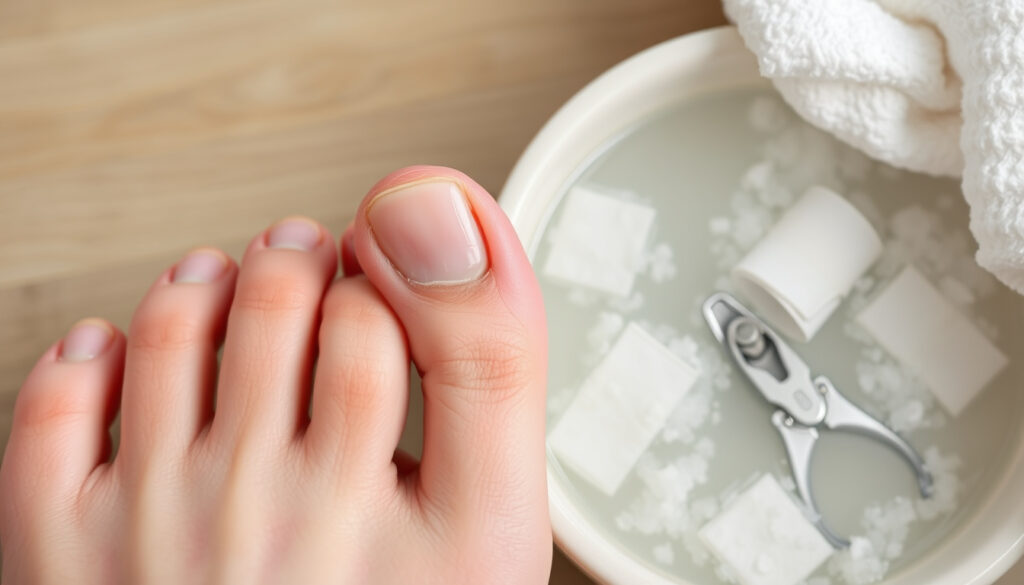
How to Get Rid of an Ingrown Toenail Overnight: Fast Tips
There’s nothing like the throb of an ingrown toenail to ruin your whole day—or keep you up all night. If you’ve ever limped through a workday with a swollen, angry toe, you know just how maddening it can be. The good news: most cases respond well to home care, and you can start feeling better fast with a few straightforward moves. Here’s what actually works, backed by the evidence.
Recommended soak time: 10-20 minutes daily ·
Rest and elevate: 12-24 hours ·
Home soak base: Warm water with Epsom salt ·
Footwear advice: Wide, comfortable shoes ·
Infection risk: Reduce with dry foot after soak
Quick snapshot
- Soaking softens skin and reduces pressure per Mayo Clinic (Mayo Clinic News Network)
- Rest and elevation reduce swelling per Cleveland Clinic (Cleveland Clinic)
- Exact overnight success rate for home remedies
- Specific timeframe for Vicks VapoRub results on ingrown nails
- Nail lifting starts working in about 2 weeks (Mayo Clinic)
- Full healing can take up to 12 weeks (Mayo Clinic)
- If pain and swelling don’t improve within a few days, see a doctor (Mayo Clinic News Network)
- Signs of infection (pus, spreading redness) need professional care (Mayo Clinic News Network)
The table below consolidates the key treatment parameters from tier-1 medical sources.
| Key fact | Detail |
|---|---|
| Primary home treatment | Warm salty water soaks |
| Daily frequency | 3-4 times (recommended by Mayo Clinic) |
| Post-soak care | Keep foot dry |
| Tier 1 sources | Mayo Clinic, NHS Wales, Cleveland Clinic |
| Soak duration | 15-20 minutes per session |
| Nail lifting timeline | 2-12 weeks for full correction |
| Epsom salt amount | 2 tablespoons per soak |
| ACV dilution | 1/4 cup per basin of warm water |
What will draw out an ingrown toenail?
The cornerstone of home treatment is simple: warm water soaks. According to the Mayo Clinic News Network, you can treat most ingrown toenails at home with soaking, cotton placement, and antibiotic ointment. The warmth softens the nail and surrounding skin, which immediately relieves that pinching pressure causing the pain.
Warm water soaks
Soak your foot in warm water for 15-20 minutes, 3-4 times daily, to reduce swelling and soften the nail (Mayo Clinic News Network). This is the single most effective first step you can take. Plain warm water works fine, though adding Epsom salt may help ease discomfort.
Epsom salt method
An Epsom salt soak—about 2 tablespoons dissolved in warm water—relieves pain and pressure for 10-20 minutes per session (Advanced Ankle & Foot). The magnesium sulfate can help reduce inflammation, though the evidence is largely anecdotal. Cedars-Sinai recommends a 20-minute soak if there are no signs of infection.
The warm water soak is the foundation of everything else. Skip it, and other remedies struggle to work. Do it consistently—3-4 times daily for 15-20 minutes—and you’ll notice pain dropping within a day or two.
Dental floss technique
After each soak, while the skin is still soft, place fresh cotton or waxed dental floss under the ingrown nail edge to encourage the nail to grow above the skin (Mayo Clinic News Network). NHS Wales recommends using a cotton bud to gently push skin away from the nail daily for several weeks. This mechanical lifting technique takes 2-12 weeks to fully correct the problem (Mayo Clinic).
What does Vicks VapoRub do for an ingrown toenail?
Vicks VapoRub won’t cure an ingrown toenail, but it may help with related fungal issues and provides a cooling sensation that temporarily masks pain. The menthol and camphor create that familiar tingle, which can feel like relief even if it’s not addressing the root cause.
Application steps
If using Vicks, apply a small amount to the tender area after soaking and drying the foot. Some people report it helps soften the nail edge slightly, but there’s no strong clinical evidence it works on ingrown toenails specifically. It’s largely a comfort measure.
Expected effects
Vicks may provide temporary pain relief through its cooling sensation. The antifungal properties in some formulations could theoretically help if a fungal infection is present, but this is secondary to the main ingrown nail problem. Cleveland Clinic notes that petrolatum jelly is equally effective as antibiotic ointments without allergy risk—so if you’re reaching for topical relief, plain petroleum jelly might be a better choice.
Timeframe for results
Don’t expect miracles. Any relief from Vicks is likely temporary—just minutes to hours of somewhat reduced discomfort. The Cleveland Clinic guidance emphasizes proven remedies like warm soaks and proper nail care over folk treatments with limited evidence.
What this means: Vicks VapoRub isn’t a reliable treatment for ingrown toenails. Use it only as a stopgap for temporary comfort while you focus on the evidence-based soaking and cotton-lifting method.
Can an Ingrown Toenail Heal Itself?
Mild cases often improve with consistent home care, but “healing itself” depends entirely on the severity. According to Mayo Clinic, most ingrown toenails respond to at-home treatment—but only if you actually do the treatment.
When it can resolve
If the nail hasn’t grown deeply into the skin and there’s no infection, daily soaks, cotton placement under the nail edge, and keeping the area clean can allow the nail to grow out correctly over 2-12 weeks (Mayo Clinic). The key is starting treatment early, before the skin has had time to swell and harden around the nail.
Signs it won’t
Red flags that home care won’t be enough: visible pus, increasing redness that spreads beyond the toe, severe pain that doesn’t respond to over-the-counter pain relievers, or swelling that keeps getting worse (Mayo Clinic News Network). If you see any of these, stop home treatment and see a doctor.
Letting it grow out risks
Attempting to “wait it out” without proper care often makes things worse. The nail continues to dig into the skin, inflammation increases, and the risk of infection rises. Cleveland Clinic explicitly warns against DIY surgery with sharp objects to prevent infection—but trying to ignore the problem is its own form of neglect.
The catch: leaving a moderate-to-severe ingrown toenail alone doesn’t make it go away. It buys time for the problem to worsen into something that needs professional intervention.
What triggers an ingrown toenail?
Understanding the cause helps prevent recurrence. The most common culprit is improper nail trimming, but shoes and foot structure play a role too.
Common causes
Cutting toenails too short or rounding the corners encourages the nail to grow into the skin (My Health Alberta). The nail follows the path of least resistance, and if the edges are gone, it grows sideways into soft tissue. Other causes include trauma to the toe, fungal infections that distort the nail shape, and genetic factors that make some people more prone to ingrown nails.
Prevention tips
Trim toenails straight across—no rounded edges. Alberta Health specifically recommends this technique to prevent ingrowth. Wear shoes with adequate toe room, especially after an ingrown nail episode. Keep your feet clean and dry to reduce infection risk.
Tight shoe relation
Tight footwear squeezes toes together, pushing the nail edge into the skin. Mayo Clinic recommends wearing open-toed shoes or sandals until the toe improves. This isn’t just comfort advice—it’s functional. Reducing pressure on the nail allows healing to proceed faster.
The trade-off: you may need to sacrifice style for a few weeks. Wider, more comfortable shoes speed recovery; narrow dress shoes slow it down.
How likely is it to get sepsis from an ingrown toenail?
While serious complications are rare in healthy adults, an untreated ingrown toenail can lead to infection that spreads. The risk is low but not zero—especially for people with diabetes or circulation problems.
Infection warning signs
Watch for increasing redness, warmth, swelling, pus, or red lines extending from the toe. Advanced Ankle & Foot lists these as signs requiring professional care. Pain that worsens despite home treatment is another red flag.
People with diabetes, peripheral vascular disease, or compromised immune systems face higher infection risks. For these individuals, even a mild-seeming ingrown toenail warrants prompt medical attention. Don’t wait to see if it improves.
When to seek medical help
Mayo Clinic advises seeking a doctor if you see pus, experience severe pain, or show no improvement with home care. A podiatrist can perform a minor in-office procedure to remove the ingrown portion of the nail and prevent recurrence.
A&E or GP guidance
For uncomplicated ingrown toenails without signs of spreading infection, see your GP rather than heading to A&E. GPs can handle most cases and will refer to a podiatrist if needed. Save emergency departments for cases with severe swelling, fever, or signs of systemic infection.
The implication: sepsis from an ingrown toenail is uncommon in healthy people but becomes more likely if you ignore infection warning signs or have underlying health conditions. Prompt attention reduces risk dramatically.
How to treat an ingrown toenail step by step
Following the evidence-based protocol from Mayo Clinic and Cleveland Clinic, here’s a practical step-by-step approach:
- Step 1 — Soak: Soak your foot in warm water for 15-20 minutes, 3-4 times daily. Plain water works, or add 2 tablespoons of Epsom salt per the Advanced Ankle & Foot recommendation.
- Step 2 — Lift: After soaking, gently place fresh cotton or waxed dental floss under the ingrown nail edge to encourage it to grow above the skin line.
- Step 3 — Apply: Apply antibiotic ointment or petrolatum jelly (which Cleveland Clinic notes is equally effective without allergy risk) to the tender area.
- Step 4 — Protect: Bandage the toe with non-stick gauze to protect the area from irritation (Premier Podiatry Group).
- Step 5 — Rest: Elevate the foot and rest for 12-24 hours, wearing open-toed shoes or going barefoot when possible.
- Step 6 — Repeat: Continue this cycle daily for 2-12 weeks until the nail has grown past the skin edge.
No home remedy eliminates an ingrown toenail overnight—Mayo Clinic states clearly that healing requires days to weeks of consistent care. Set realistic expectations and commit to the routine.
Over-the-counter pain relievers like acetaminophen, ibuprofen, or naproxen sodium can ease discomfort while you work through the treatment process (Mayo Clinic). Don’t grin and bear it—manage the pain so you can keep up with the soaking and care routine.
“Petrolatum jelly is just as effective as the most popular over-the-counter antibiotic ointments but doesn’t contain ingredients that can cause allergic reactions.”
— Dr. Botek, Podiatrist, Cleveland Clinic
“You can treat most ingrown toenails at home.”
— Mayo Clinic
Confirmed
- Soaking softens skin per Mayo Clinic and NHS Wales guidelines
- Rest and elevation reduce swelling
- Warm water soaks 10-20 minutes, 3-4 times daily work best
- Nail lifting with cotton/floss takes 2-12 weeks
- Petrolatum jelly is allergy-safe alternative to antibiotic ointments (Cleveland Clinic)
- Avoid DIY surgery with sharp objects
What’s unclear
- Exact overnight success rate for home remedies
- Specific timeframe for Vicks VapoRub results on ingrown nails
- Clinical studies comparing vinegar vs plain warm water efficacy
- Long-term prevention success rates
The pattern: evidence strongly supports warm soaks and nail lifting, with moderate-quality sources backing Epsom salt and petrolatum jelly. Claims about apple cider vinegar’s disinfectant properties come from tier-2 sources with medium confidence—the science is less solid there.
Related reading: Cancer Red Spots on Skin – Signs, Causes and When to Worry · New Balance Fresh Foam 1080 – Plush v13 for Daily Miles
Frequently asked questions
How Do I Get Rid Of My Ingrown Toenail?
Soak your foot in warm water for 15-20 minutes, 3-4 times daily. After soaking, place cotton or dental floss under the ingrown nail edge and apply antibiotic ointment or petrolatum jelly. Bandage the toe and wear open-toed shoes. Repeat daily for 2-12 weeks until the nail grows past the skin edge.
Will a GP fix an ingrown toenail?
Yes. GPs can assess severity, prescribe medication if needed, and perform minor procedures or refer to a podiatrist for more involved treatment. Don’t assume you need a specialist—start with your GP.
How to get rid of throbbing toenail pain?
Warm soaks provide immediate relief by softening the skin and reducing pressure on the ingrown edge. Over-the-counter pain relievers (acetaminophen, ibuprofen) help manage discomfort. Elevation and rest for 12-24 hours further reduce swelling and pain.
How to fix ingrown toenail permanently?
The cotton or dental floss lifting technique, done consistently for 2-12 weeks, trains the nail to grow above the skin edge rather than into it. For recurrent cases, a doctor can perform a partial nail removal procedure that prevents regrowth in the problematic area.
How do I numb my toe to remove ingrown toenail?
A warm soak for 15-20 minutes naturally numbs the area temporarily. If you need more numbing for a procedure, see a doctor—they can use local anesthesia. Don’t try to numb the toe yourself with ice or topical products intended for other uses.
What triggers an ingrown toenail?
Improper nail trimming (cutting too short or rounding edges) is the most common cause. Tight shoes, trauma to the toe, fungal infections, and genetic factors also contribute.
More related posts
 NASA Artemis Rocket Launch – Schedule, Live Stream and Expectations
 Millie Bobby Brown Baby Adoption: Latest Details
 Specsavers Eye Test Cost 2025: Prices, Free Options, Offers
 Side Tables for Living Room: Best Picks & Buying Guide (Ireland)
 Is Today a Bank Holiday in the UK? 2025, 2026 & Regional Guide
 Sky Sports Transfer News – Premier League Deadline Day Deals
 Why I Gel Nail Poli h Banned in Europe? EU TPO Ban Explained
 Swollen Glands in Neck: Causes, Red Flags, and Relief