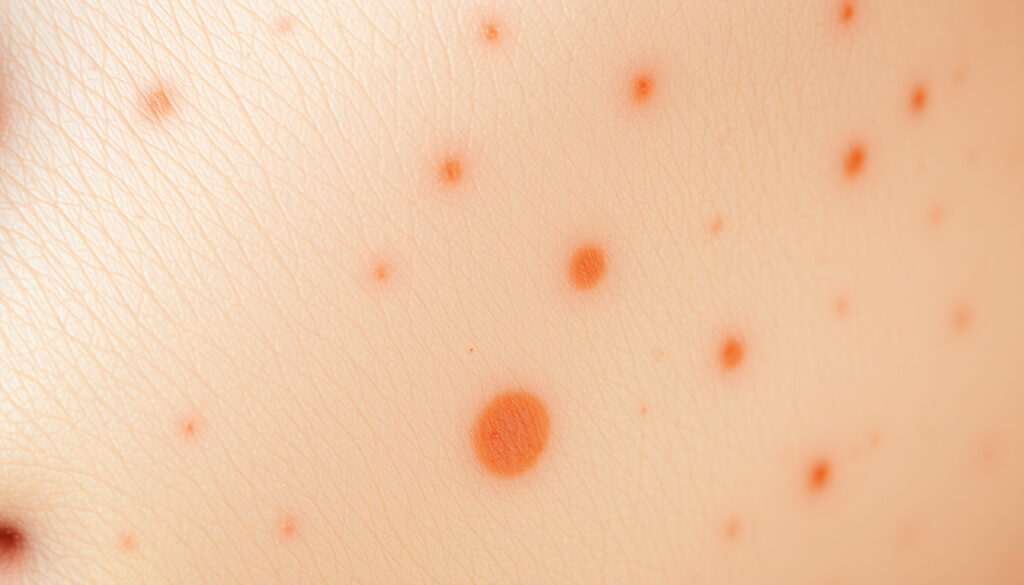
Cancer Red Spots on Skin – Signs, Causes and When to Worry
Red spots on the skin often spark concern, but the vast majority are harmless. These small marks can result from burst blood vessels, benign growths, or—in some cases—cancerous changes. Understanding the difference between a simple skin blemish and a potential warning sign can make all the difference in outcomes.
This guide examines what research and medical sources reveal about red spots and their connection to cancer. From basal cell carcinoma to cherry angiomas, we break down the characteristics that separate benign spots from those that warrant professional evaluation.
The key lies in recognizing patterns: growth over time, texture changes, and how spots respond to treatment. Armed with accurate information, individuals can make informed decisions about when self-care suffices and when a dermatologist’s expertise becomes essential.
Are Red Spots on Skin a Sign of Cancer?
The short answer is: it depends. Red spots on skin appear for numerous reasons, and while some can indicate malignancy, most are harmless. Distinguishing between the two requires attention to specific characteristics.
Most red spots on skin are benign. According to dermatological sources, cherry angiomas—a common type of red spot—account for the majority of cases and carry no cancer risk. Only a small percentage of red skin lesions prove malignant.
- Cherry angiomas are benign growths with a distinct cherry-red appearance that rarely resemble skin cancer
- Basal cell carcinoma is the most common skin cancer and frequently appears as a shiny red or skin-colored bump
- Approximately 22% of primary melanoma lesions cause itching
- Skin cancers typically develop on sun-exposed areas: face, neck, arms, and upper body
- Persistent, non-healing spots that worsen despite treatment warrant immediate evaluation
- Early detection of skin cancer leads to treatment success rates exceeding 80%
- People with lighter skin have higher risk for squamous cell carcinoma
| Spot Type | Cancer Risk | Typical Appearance | Common Locations |
|---|---|---|---|
| Cherry Angioma | None (benign) | Dome-shaped, bright red, small | Torso, arms |
| Basal Cell Carcinoma | High (most common skin cancer) | Shiny bump, red or skin-colored | Face, ears, neck |
| Squamous Cell Carcinoma | High (treatable) | Firm red bump, scaly patch | Sun-exposed areas |
| Melanoma | Variable (aggressive if untreated) | Red/inflamed patch, mole-like | Anywhere on body |
| Kaposi Sarcoma | Associated with virus | Deep red, purple, brown lesions | Skin surface, internal organs |
| Petechiae | Requires evaluation | Tiny red spots from broken vessels | Various (depends on cause) |
What Types of Skin Cancer Cause Red Spots?
Several forms of skin cancer can manifest as red spots or lesions. Each has distinct characteristics that help dermatologists identify them during examination.
Basal Cell Carcinoma
Basal cell carcinoma typically presents as a shiny bump that appears red or skin-colored. This slow-growing cancer often begins as a small growth that enlarges over time, frequently developing on sun-exposed areas such as the face and neck. On lighter skin, these lesions may appear pink or flesh-colored, while on darker skin they can show up as dark brown or black patches that resemble non-cancerous growths.
The American Cancer Society notes that BCC rarely spreads to distant parts of the body, but it can cause significant local damage if left untreated. According to Mayo Clinic resources, this cancer is frequently mistaken for dry skin or eczema due to its appearance as an irritated red patch.
Squamous Cell Carcinoma
Squamous cell carcinoma most commonly appears as a firm red bump, scaly patch, or a sore that heals and reopens. Early-stage SCC causes scaly, red skin similar to psoriasis and may begin as a small, itchy bump that develops into dry, scaly patches that bleed or crust over time.
SCC typically forms on sun-exposed skin including the ear rim, face, neck, arms, chest, and back. Sources indicate this cancer can also be caused by tanning beds, injury, or infection with human papillomavirus—not just sun exposure alone.
Melanoma
Melanoma usually resembles a mole but can appear as a reddish or inflamed patch of skin. These patches often change in color, shape, or size over time, distinguishing them from stable skin growths. According to MD Anderson Cancer Center, melanoma can occur anywhere on the body and may develop from existing moles.
In people with darker skin tones, melanoma tends to appear on the palms or soles of the feet rather than in sun-exposed areas—a pattern that may lead to delayed diagnosis if these locations are not specifically examined.
Rare Cancers Causing Red Spots
Other cancers can produce rash-like red spots that deserve mention. These include:
- Leukemia—causes broken blood vessels under the skin that resemble a rash
- Mycosis fungoides—develops rash-like patches that eventually become sores and tumors
- Sézary syndrome—produces an itchy, red rash covering up to 80% of the body
- Kaposi sarcoma—creates deep red, purple, or brown lesions on the skin’s surface
While BCC and SCC typically develop on sun-exposed areas, melanoma can appear anywhere—including locations not regularly exposed to sunlight. This is why full-body skin examinations matter.
What Causes Red Spots on Skin (Benign vs Cancerous)?
Understanding the underlying causes of red spots helps distinguish between harmless marks and those requiring medical attention. The origin—whether inflammatory, vascular, or neoplastic—often determines the appropriate response.
Benign Red Spots
Cherry angiomas represent the most common type of benign red spot. These small, dome-shaped growths appear bright red due to dilated blood vessels and typically cause no symptoms. Because of their distinct cherry red appearance, they are unlikely to be mistaken for skin cancer.
Petechiae—tiny red spots resulting from broken blood vessels—appear for various reasons including straining, certain medications, or underlying medical conditions. While they can signal leukemia in some contexts, petechiae alone do not indicate cancer without accompanying symptoms.
Cancerous Red Spots
Cancerous red spots arise from abnormal growth of skin cells rather than inflammation or vascular changes. Unlike benign spots, malignant lesions tend to grow slowly, persist without improvement, and may bleed or ooze despite treatment attempts.
According to dermatological sources, key differences include:
- Typical rashes (eczema, psoriasis, dermatitis): result from inflammation, allergies, or immune responses; appear as red, itchy, scaly patches that may spread widely and improve with creams or resolve naturally
- Skin cancer lesions: result from abnormal cell growth; appear as localized red or scaly patches that stay in one spot while growing slowly, persisting and worsening despite topical treatments
If itchy, irritated skin does not respond to anti-itch cream, cold compresses, or over-the-counter corticosteroids, skin cancer becomes a more likely possibility. Persistent symptoms that fail to improve warrant professional evaluation.
When to See a Doctor for Red Spots on Skin
Not every red spot requires a dermatologist visit, but certain warning signs should prompt professional evaluation. Early detection significantly improves treatment outcomes for skin cancers.
Red Flags Requiring Immediate Attention
You should consult a dermatologist if you notice any of the following:
- A new growth or lesion that looks different from surrounding skin
- An existing mole or spot that changes in appearance—shape, size, or color
- A skin lesion that is itchy or painful
- A sore that does not heal or continues worsening over time
- Anti-itch treatments failing to resolve suspicious itching
Early Warning Signs of Skin Cancer
According to MD Anderson Cancer Center, the early warning signs of skin cancer include:
- A new spot on the skin
- Changes in an existing mole or spot (shape, size, or color)
- A shiny bump that’s red or skin-colored
- A rough, red patch that feels dry or scaly
- A spot that itches or hurts
- A sore on the skin that won’t heal
- A firm, red nodule
- A scaly or crusty lesion with irregular borders
Perform regular skin self-checks, noting any spots that persist beyond four weeks without improvement. Photograph suspicious areas to track changes over time—early changes in shape, size, or color are among the most reliable indicators of potential malignancy.
Understanding Spot Development: A Timeline Perspective
How red spots develop and evolve provides important diagnostic clues. The timeline of appearance, growth, and response to treatment helps differentiate benign conditions from cancerous ones.
- Sudden onset red spots—appear quickly, often from trauma, allergic reactions, or broken capillaries; typically benign and self-resolving within days to weeks
- Gradual appearance with growth—spots that emerge slowly and increase in size over months may indicate benign growths like cherry angiomas or potentially cancerous lesions requiring monitoring
- Post-sun exposure changes—new spots or changes in existing spots following significant UV exposure, particularly in fair-skinned individuals, warrant careful observation
- Persistent, non-healing lesions—spots that fail to improve with standard treatments and continue to evolve represent the most concerning pattern, requiring biopsy to rule out malignancy
What We Know—and What Remains Unclear
Medical research has established certain facts about red spots and skin cancer, while other questions remain subjects of ongoing investigation.
| Established Information | Information That Remains Unclear |
|---|---|
| Biopsy is required for definitive cancer diagnosis | Exact triggers for malignant transformation in early lesions |
| Self-examination can detect changes early | Why some BCCs remain stable for years while others advance |
| UV exposure increases skin cancer risk | Role of genetics versus environment in individual cases |
| Cherry angiomas are benign and unrelated to cancer | Precise reasons for petechiae appearing in non-cancerous conditions |
| Early treatment leads to 80%+ cure rates | Optimal screening frequency for different risk groups |
While the ABCDE rule (Asymmetry, Border, Color, Diameter, Evolution) serves as a useful screening framework for melanoma, research sources indicate that changes in shape, size, and color represent the most consistently validated diagnostic features across skin cancer types.
Risk Factors and Demographics
Skin cancer risk varies across populations based on skin type, sun exposure history, and other factors. Understanding these patterns helps identify who benefits most from regular screening.
People with lighter skin are most likely to develop squamous cell carcinoma. According to Cancer Therapy Advisor, this correlation exists because lighter skin contains less melanin—a pigment that provides some protection against UV damage. BCC and SCC predominantly develop on sun-exposed areas in these populations.
However, melanoma presents differently across skin tones. In people with darker skin, melanoma frequently occurs on the palms or soles of the feet rather than on sun-exposed areas. This atypical presentation may contribute to delayed diagnosis if these locations are not specifically examined during skin checks.
Additional risk factors include a history of tanning bed use, previous skin injuries (such as burns or scars), and infection with certain strains of human papillomavirus—which has been linked to squamous cell carcinoma development.
Medical Perspectives on Early Detection
Skin cancer remains one of the most treatable forms of cancer when caught early. The majority of skin cancers—particularly basal cell and squamous cell carcinomas—respond well to treatment when identified before spreading.
— Dermatological consensus on early intervention
Medical organizations emphasize that regular skin examinations and prompt evaluation of changing lesions form the foundation of early detection. The American Academy of Dermatology recommends annual skin checks, with more frequent examinations for those with elevated risk factors.
Most red spots on skin are benign. However, when spots persist, grow, or change in appearance, professional evaluation becomes essential for ruling out malignancy.
— Clinical guidance on skin lesion assessment
Summary and Next Steps
Red spots on skin represent a broad category of findings, ranging from completely harmless cherry angiomas to potentially serious carcinomas. The critical distinction lies in recognizing patterns: cancerous lesions tend to grow slowly, persist despite treatment, and show changes in color, shape, or size over time.
While most red spots are benign, any spot that meets the warning signs—persistent itching unresponsive to treatment, bleeding, rapid growth, or non-healing sores—should prompt a dermatologist visit. Early detection remains the single most important factor in successful skin cancer treatment, with cure rates exceeding 80% when cancers are identified and addressed promptly.
For those seeking to understand their rights regarding medical leave while undergoing skin examinations or treatment, information about Uncertified Sick Leave Ireland – How Many Days Allowed? may prove helpful. Additionally, maintaining overall wellness through proper nutrition supports immune function and skin health.
Frequently Asked Questions
What kind of cancer causes red spots on skin?
Basal cell carcinoma, squamous cell carcinoma, and occasionally melanoma can appear as red spots. Rare cancers including leukemia, mycosis fungoides, and Kaposi sarcoma may also produce red or reddish-purple lesions. Most red spots, however, are benign.
Are cherry angiomas cancer?
No. Cherry angiomas are benign growths composed of dilated blood vessels. They appear as small, bright red, dome-shaped spots and do not indicate cancer. Their distinct appearance makes them unlikely to be confused with malignant lesions.
How to tell if a red spot on skin is cancer?
Look for: growth over time, asymmetry, irregular borders, color changes, bleeding without injury, and spots that persist beyond four weeks without improvement. A spot that doesn’t respond to over-the-counter treatments and continues evolving warrants professional evaluation. Only a biopsy can provide definitive diagnosis.
What does skin cancer red spots look like?
Basal cell carcinoma often appears as a shiny red or skin-colored bump. Squamous cell carcinoma may show as a firm red bump, scaly patch, or a sore that heals and reopens. Melanoma can look like a mole or appear as a reddish, inflamed patch that changes over time.
Are red moles on skin cancer?
Not necessarily. While melanoma can resemble a mole, most red moles are harmless. However, any mole that changes in appearance—particularly developing asymmetry, irregular borders, multiple colors, or increasing size—should be evaluated by a dermatologist.
When should I worry about red spots on skin?
Worry when spots show: persistent growth over months, bleeding without injury, itching that doesn’t respond to treatment, color or texture changes, or failure to heal. Also be concerned if spots appear in unusual locations or differ significantly from surrounding skin.
What are red spots on skin that are not cancer?
Common benign causes include cherry angiomas, petechiae from minor trauma, allergic reactions, broken capillaries, psoriasis, eczema, and seborrheic keratosis. These conditions typically improve with appropriate treatment or resolve on their own.
Can skin cancer look like a red rash?
Yes. Basal cell carcinoma can appear as a red, irritated patch resembling eczema. Squamous cell carcinoma may present as scaly, red skin similar to psoriasis. Mycosis fungoides and Sézary syndrome specifically produce rash-like red patches that can indicate cutaneous lymphoma.
More related posts
 Why Is Temple Bar Famous? History, Pubs & Tourist Trap Truth
 People Data Labs Alternatives: Top Competitors Guide
 Swollen Glands in Neck: Causes, Red Flags, and Relief
 Side Tables for Living Room: Best Picks & Buying Guide (Ireland)
 Property Price Register Ireland: Free Search Guide
 RIP.ie Recent Deaths Dublin: Costs, Tips, and How to Search
 Wordle The New York Times: How to Play, Hints & Games
 Tool Shop Near Me: Best Ireland and Dublin Options