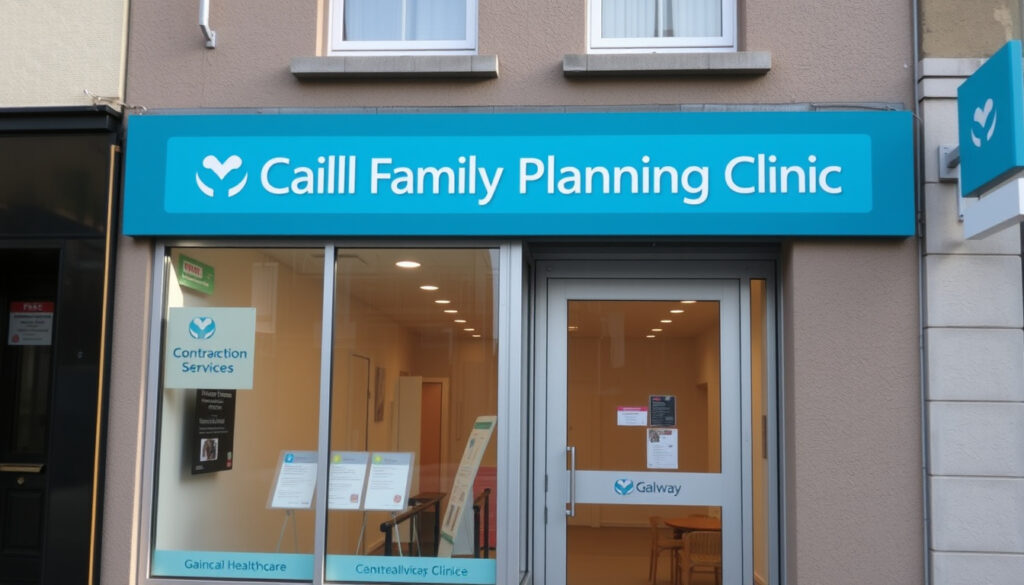
Galway Family Planning Clinic – Services & Free Contraception
Few things are more personal than choosing a contraception method, and the options in Galway are wider than many people realise — the Galway Family Planning Clinic has been a fixture since 1977, and since Ireland introduced a free contraception scheme for women under 35 in 2022, the clinic has become an even more central resource. This guide walks through the clinic’s services, how the scheme works, and what to consider when comparing implants and coils.
Founded: 1977 · Free contraception age: 35 and under · Phone: 091 562992 · Location: Galway, Ireland · Services: Birth control, sexual health, STI testing, abortion referrals
Quick snapshot
- Contraception is legal in Ireland (Department of Health (national health authority))
- Free contraception for women 35 and under (HSE (Health Service Executive))
- The “best” drug or method depends on individual health factors (Irish Family Planning Association (independent sexual health provider))
- Clinic founded in 1977 (Clinic website)
- 1977: Galway Family Planning Clinic established (Clinic website)
- September 2022: Free contraception scheme launches for ages 17–35 (Galway Bay Medical Centre (Galway GP practice))
- Continuity of care for LARCs even after age limit (Department of Health)
Six details that define the clinic, one pattern: consistent, low-cost access across a range of methods.
| Detail | Value |
|---|---|
| Clinic founded | 1977 (Galway Family Planning Clinic) |
| Free contraception age | Women and people aged 17–35 (Irish Family Planning Association) |
| Phone number | 091 562992 (HSE) |
| Services | Birth control, sexual health, STI testing, abortion referrals (Clinic website) |
| Clinic hours | Mon–Fri 9.30–5, Sat 10–1 (HSE) |
| LARC coverage | Implant and hormonal coil free under scheme; copper coil €60 (IFPA) |
| Age eligibility window | From 17th birthday to day before 36th (IFPA) |
What is the Galway Family Planning Centre?
History and founding
- Established in 1977, the clinic is one of Galway’s longest-standing sexual health providers (Galway Family Planning Clinic).
- It operates as a private clinic but participates in the state’s free contraception scheme (HSE).
Over four decades, the clinic has evolved from a small volunteer-run service into a trusted medical practice. Its longevity reflects a consistent demand for non-judgmental, confidential care in the west of Ireland.
A clinic that has operated since 1977 offers the kind of institutional memory that newer services lack — meaning fewer administrative hurdles when returning for follow-ups or method changes.
Services overview
- Assessment, advice, prescription, and fitting for all methods of contraception (Clinic website).
- STI testing, including walk-in options (HSE).
- Abortion referrals and post-abortion support (Clinic website).
The clinic serves both women and men, though the free contraception scheme is limited to those with a female reproductive anatomy (MyContraception Ireland).
Location and contact
- Based in Galway city, with phone 091 562992 and hours Mon–Fri 9.30–5, Sat 10–1 (HSE).
- Alternate Galway provider: LifeCycle Women’s Health Clinic in Salthill (HSE).
Based in Galway city, with phone 091 562992 and hours Mon–Fri 9.30–5, Sat 10–1 (HSE). An alternate Galway provider is LifeCycle Women’s Health Clinic in Salthill (HSE).
Bottom line: The Galway Family Planning Clinic is a long-established, full-service clinic that now acts as a key gateway to Ireland’s free contraception scheme. For adults under 35, most methods are free at the point of use. For everyone else, consultation fees apply but remain moderate.
The implication: the clinic’s longevity and scheme participation make it a reliable option for Galway residents.
What are three types of family planning?
Hormonal methods
- Pill, patch, vaginal ring, injectable — all alter hormone levels to prevent ovulation (Irish Family Planning Association).
- Available through the clinic with a prescription under the free scheme for eligible ages.
Hormonal methods require user adherence (daily pill, weekly patch, monthly ring, or quarterly injection). The clinic provides fitting and instruction for all of them.
Barrier methods
- Condoms, diaphragm, cervical cap — physically block sperm (SH:24).
- Condoms are available over the counter; diaphragms require fitting by a clinician.
Barrier methods carry lower efficacy than LARC methods but offer zero hormonal side effects and protect against some STIs.
Long-acting reversible contraception (LARC)
- Implant and coil (IUD/IUS) – effectiveness over 99% (Department of Health).
- LARC fittings and removals are free under the scheme for eligible patients (IFPA).
Bottom line: Three families of methods exist, but LARC methods — implant and coil — dominate the free scheme because they combine the highest efficacy with the lowest ongoing user effort. Barrier methods remain important for STI prevention.
The pattern: the free scheme incentivises LARC options, making them the most cost-effective for eligible patients.
“Which drug is best” is a misleading question: the best method is the one that fits your body and lifestyle. The clinic can help narrow choices through a consultation.
What are the benefits of family planning?
Health benefits
- Prevents unintended pregnancy and allows birth spacing, which reduces maternal and infant mortality risks (WHO).
- Hormonal methods can regulate periods, reduce acne, and lower ovarian cancer risk.
Economic benefits
- Fewer unplanned pregnancies mean lower healthcare costs and more stable workforce participation.
- In Ireland, the free scheme eliminates direct cost for eligible patients at the point of care (Department of Health).
Social benefits
- Empowers individuals to make independent decisions about their reproductive health (IFPA).
- Reduces the number of crisis pregnancies and associated social strain.
Bottom line: Prevention is the core benefit, but the ripple effects — health, economic, social — are what make contraception a public health priority. Ireland’s investment in the free scheme reflects this.
What this means: the scheme’s reach extends beyond individual health, reducing systemic costs.
Is contraception legal in Ireland?
Legal status of contraception
- Contraception has been fully legal in Ireland since 1980, following the Health (Family Planning) Act (Irish Statute Book).
- All methods — including emergency contraception — are legally available without spousal consent or other restrictions.
Free contraception scheme for under 35s
- Launched by the Irish Government in September 2022 (Galway Bay Medical Centre).
- Covers consultations, prescriptions, and fitting/removal of implants and hormonal coils (Department of Health).
- Copper coil is not currently covered and costs €60 at most providers (IFPA).
Age requirements
- Eligible from the date of 17th birthday to the day before 36th birthday (IFPA).
- Residency in Ireland and a PPS number are required (MyContraception Ireland).
- Once a LARC is fitted under the scheme, ongoing care is covered even if the patient ages out of the band (Department of Health).
Bottom line: Yes, contraception is fully legal, and since 2022, the state has paid for it for residents aged 17–35. The scheme’s age cut-off is firm, but continuity-of-care rules prevent a gap for existing LARC users.
The catch: eligibility requires a PPS number and reproductive anatomy that matches the scheme’s definition.
What is better, the implant or coil?
Three key differences between the two most popular LARC methods, one pattern: both are highly effective, but trade-offs in duration, side effects, and cost under the scheme matter.
| Feature | Implant (Implanon) | Coil (IUD / IUS) |
|---|---|---|
| Duration of effectiveness | Up to 5 years (Galway Family Planning Clinic) | 3–10 years depending on type (hormonal coil 5 yrs, copper coil 10 yrs) (IFPA) |
| Effectiveness | Over 99% | Over 99% |
| Insertion site | Under the skin of the upper arm | Inside the uterus (requires pelvic exam) |
| Removal | Simple in-office procedure | In-office removal with strings |
| Common side effects | Irregular bleeding, mood changes, weight gain | Cramping, spotting, hormonal coils may cause breast tenderness |
| Cost under free scheme | Fully covered (fitting and removal) (Department of Health) | Hormonal coil fully covered; copper coil €60 (IFPA) |
Upsides
- Both are >99% effective and reversible
- Implant lasts 5 years with no daily effort
- Copper coil provides hormone-free contraception for up to 10 years
- Both are fully or mostly free under the scheme for eligible patients
Downsides
- Both require a clinical procedure to insert and remove
- Implant can cause unpredictable bleeding patterns
- Copper coil may increase cramping and heavy periods
- Copper coil still costs €60 out of pocket
Bottom line: For younger patients who want a set-and-forget method with no out-of-pocket cost, the implant is the simpler choice. For those who prefer a hormone-free option or need longer-term coverage (and can spare €60), the copper coil wins. The clinic can fit both.
“The Galway Family Planning Clinic provides assessment, advice, prescription, and fitting for all methods of contraception.”
Galway Family Planning Clinic (clinic’s official service list)
“The free contraception scheme is available to women and people from age 17 to 35. It covers consultations, prescriptions, fitting and removal of an implant or coil, and some checks.”
“The fitting and removal of all LARCs, including hormonal coils, the copper coil, and the hormonal implant, are free under the scheme. The copper coil itself is not currently covered and can be supplied for €60.”
Irish Family Planning Association (IFPA – independent sexual health charity)
The pattern across these sources is clear: the clinic provides the full menu, the state pays for most of it, and the only gap is the copper coil’s device cost. For residents of Galway, that means the implant has the simplest financial path, while the coil still offers strong value for those willing to pay a small device fee.
Related reading: **National Maternity Hospital Dublin: History & Relocation** · **Carer’s Allowance Ireland 2026: Rates, Eligibility & How to Apply**
spunout.ie, sh24.ie, ifpa.ie, mycontraception.ie, hsehealthandwellbeingnews.com, lifecycleclinic.ie, lifecycleclinic.ie
Frequently asked questions
What services does the Galway Family Planning Clinic offer?
Birth control, sexual health consultations, STI testing, abortion referrals, and women’s health checks. The clinic fits implants and coils and participates in the free contraception scheme for eligible ages (Clinic website).
How do I make an appointment at the Galway Family Planning Clinic?
Call 091 562992. Drop-ins are accepted for some services, but appointments are recommended, especially for LARC fittings (HSE).
Is the Galway Family Planning Clinic free?
Not entirely. Consultations and prescriptions cost a fee for patients outside the free contraception scheme (ages 17–35). Eligible patients receive the scheme’s covered services at no charge (Department of Health).
What STI tests are available at the clinic?
The clinic offers testing for chlamydia, gonorrhoea, HIV, syphilis, and other infections. Results are typically available within a few days (Clinic website).
Can I get an abortion referral at the Galway Family Planning Clinic?
Yes, the clinic provides abortion referrals and post-abortion support in line with Irish law (Clinic website).
What are the clinic’s opening hours?
Monday to Friday 9.30 am to 5.00 pm, Saturday 10.00 am to 1.00 pm. Closed Sunday (HSE).
Do I need a referral to visit the clinic?
No referral is required. You can book directly or walk in during opening hours (HSE).
More related posts
 Houses for Sale Blackrock: Dublin, Cork, Louth Markets
 Pamela Scott Online Sale Ireland: Best Deals & Stores
 Uncertified Sick Leave Ireland – How Many Days Allowed?
 Carer’s Allowance Ireland 2026: Rates, Eligibility & How to Apply
 Hollie Davidson Partner Helen: Split & Rugby Career Update
 St Mary’s Church Athlone: Phone Number, Webcam & Directions
 How High Is Croagh Patrick? Height, Difficulty & Climbing Guide
 Cork to Killarney Train: Timetable, Prices & Tickets