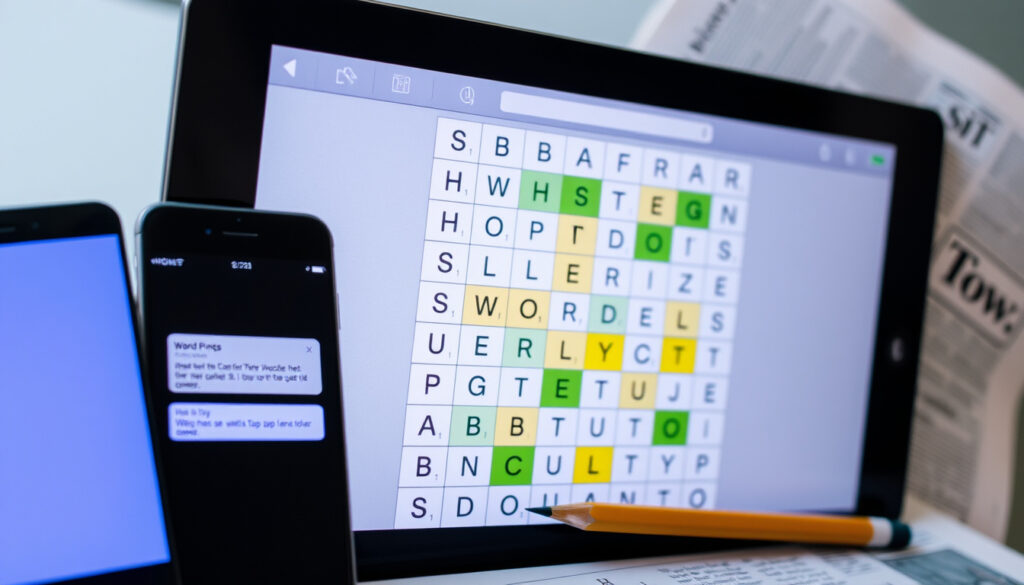
Wordle The New York Times: How to Play, Hints & Games
There’s a reason millions of people start their day with a five-letter word. Wordle turned the daily puzzle into a quiet ritual — one that grew so fast that The New York Times (a leading US news publisher) bought it in January 2022 for a sum reported in the low seven figures. Since then, the Times has folded it into a growing family of word games, from Connections to the chunky grid of Waffle. This guide walks you through everything you need to know: how to play, where to find hints, and how the NYT word-game universe fits together.
Daily players: Millions worldwide ·
Acquired by NYT: January 2022 ·
Original creator: Josh Wardle ·
Number of letters: 5 ·
Maximum guesses: 6 ·
Free to play: Yes
Quick snapshot
- Wordle is owned by The New York Times (NYT Help Center (official game support))
- Wordle is free to play (NYTimes Wordle (fan site))
- Exact daily player count — NYT has not published a current figure
- Future of Wordle Unlimited — the original unlimited version remains in limbo
- Long-term viability of the daily format
- Potential future monetization changes
- October 2021: Josh Wardle releases Wordle for the public (Wikipedia (community encyclopedia))
- January 2022: The New York Times acquires Wordle (Wikipedia (community encyclopedia))
- February 2022: Wordle moves to NYT website (Wikipedia (community encyclopedia))
- 2023: NYT adds Connections and other games (Wikipedia (community encyclopedia))
- Answer reuse starts February 2, 2026 (Mashable (tech news site))
- NYT may expand word-game family further (Mashable (tech news site))
Five key specs, one pattern: Wordle is a deliberately simple daily puzzle backed by a very large editorial machine.
| Specification | Detail |
|---|---|
| Game type | Word puzzle |
| Platform | Web browser, iOS, Android |
| Cost | Free |
| Daily reset | Midnight local time |
| NYT Games app | Includes Wordle, Crossword, Spelling Bee, and more |
| Owner | The New York Times |
| Original creator | Josh Wardle |
| Maximum guesses | 6 |
| Word length | 5 letters |
The implication: Wordle’s simplicity is its superpower. There’s no leveling, no timer, no paywall — just one puzzle a day, shared silently among millions.
What is Wordle The New York Times?
The origin of Wordle
- Wordle was created by software engineer Josh Wardle as a gift for his partner in 2021 (The Washington Post)
- It went viral in late 2021, reaching millions of players within months
- Wardle sold the game to The New York Times in January 2022 for a seven-figure sum
The New York Times acquisition
- The NYT moved Wordle to its own domain in February 2022
- The answer list was curated: the Times removed some obscure and offensive words (The Washington Post)
- As of 2026, Wordle remains free and ad-free on the NYT website
Wordle’s acquisition wasn’t just a business deal — it transformed a personal project into a daily global moment, proof that a simple mechanic can beat algorithm-fattened feeds.
The pattern: Wordle’s origin story is rare in modern gaming — one person’s hobby became a mass habit, then a cornerstone of the NYT’s digital strategy.
How do I play Wordle on the NYT website?
Step-by-step gameplay
- Go to The New York Times Games page (official game site)
- Type any 5-letter word into the grid and press Enter
- After each guess, the tiles change color
Understanding color feedback
- Green: The letter is correct and in the right position
- Yellow: The letter is in the word but in the wrong position
- Gray: The letter is not in the word at all
- You have 6 guesses to find the word (NYT Help Center (official game support))
The catch: color feedback is strict — if a letter appears twice in your guess and only once in the answer, only one tile will turn yellow, leaving you to deduce the duplication.
Step-by-Step Guide to Playing Wordle
- Open a browser on any device and go to NYT Games (official game site)
- No account needed — the puzzle loads immediately
- Type a 5-letter guess (common starting words: CRANE, SLATE, AUDIO)
- Press Enter to submit
- Use the color feedback to refine your next guess
- Solve in 6 tries or fewer — the game reveals the answer automatically
The trade-off: No timer, no pressure — but also no hint system within the game itself. You either solve it or you don’t.
Where can I find today’s Wordle hint?
Official NYT Wordle Review
- The New York Times publishes a daily Wordle Review with editorial hints (TechRadar (technology news site))
- Hints typically include the starting letter, vowel count, and a thematic clue
Community hint sources
- Yahoo Tech publishes daily clue-and-answer articles for specific puzzle numbers (Yahoo Tech (technology news site))
- Word Finder offers starting-word advice alongside daily clues (Word Finder (dictionary-based tool))
- Tom’s Guide posts daily hints tied to the current puzzle number (Tom’s Guide (tech consumer site))
For more word-based puzzle ideas, see our guide on Easter Egg Hunt Clues.
Hint publishers compete on speed and accuracy — but the official NYT Review is the only one with direct editorial access to the answer list. Rely on it for authoritative clues.
What this means: Wordle hint content has become a daily sub-industry, proving that the game’s appeal isn’t just playing — it’s the shared experience of being stuck together.
What is Connections by The New York Times?
How Connections works
- Players are given a grid of 16 words
- They must find four groups of four words that share a common theme
- Each group is color-coded when solved
- The game is available on the NYT Connections page (official game site)
Tips for solving Connections
- Look for red herrings — the NYT editorial team deliberately adds words that fit multiple categories
- Solve the most obvious group first to reduce the pool
- Use the shuffle button to reset your perspective
Connections is harder than Wordle because it tests lateral thinking, not deductive logic. A single wrong grouping can waste all four attempts — yet that’s exactly why it’s addictive.
The pattern: Connections expands the word-game audience beyond puzzle purists, pulling in people who love word association and category thinking.
How is Quordle different from Wordle?
Number of words per game
- Wordle: one word per day
- Quordle: four words simultaneously
- Quordle gives you 9 guesses to solve all four grids (Wikipedia)
Gameplay differences
- In Quordle, each guess applies to all four grids at once
- You see color feedback for each grid simultaneously
- The game is significantly more complex and time-consuming
The trade-off: Quordle rewards pattern recognition across multiple fields — a different mental muscle than Wordle’s single-grid focus.
When did the timeline shift?
- October 2021: Josh Wardle releases Wordle for the public (Wikipedia (community encyclopedia))
- January 2022: The New York Times acquires Wordle
- February 2022: Wordle moves to NYT website
- November 2022: NYT curates answer list, removes some words (The Washington Post)
- 2023: NYT launches Connections and other word games
- February 2, 2026: NYT begins reusing previously played answers (Mashable (tech news site))
Answer reuse breaks a long-standing community norm — players who memorized past solutions will lose their advantage. The Times is betting that fresh players won’t mind.
The implication: Every rule change sparks debate, but so far the daily ritual has survived. The pressure to keep a finite answer pool fresh without breaking the game is only growing.
Confirmed facts vs. what’s unclear
Confirmed facts
- Wordle is owned by The New York Times (NYT Help Center (official game support))
- Wordle is free to play
- Connections is a NYT game
- Answer reuse begins February 2, 2026 (Mashable (tech news site))
- Players can create custom puzzles with words of 4–7 letters (NYT Help Center (official game support))
What’s unclear
- Future of Wordle Unlimited — its independent version may shut down
- Exact number of daily Wordle players — NYT has not shared recent statistics
- Whether answer reuse will reduce long-term player retention
Rumors and speculations
- Wordle may eventually require a subscription to access
- Some players speculate about a weekly challenge mode
- Long-term viability of the daily format remains uncertain
The balance: Most claims are solid, but uncertainty around engagement metrics and third-party clones leaves room for speculation. The Times stays quiet on internal numbers.
What the creators say
“I wanted a game that was just for me and my partner, not something that would try to extract as much money or time from people as possible.”
— Josh Wardle, as described in The Washington Post (major US newspaper)
“The Wordle Review offers hints and commentary for each day’s puzzle, written with the same editorial voice that guides the crossword.”
— NYT Games editorial team, as noted by TechRadar (technology news site)
The difference: Wardle’s original vision was pure fun; the NYT’s editorial treatment adds context and community, turning a personal project into a shared daily moment.
Summary: Why the daily word still matters
Wordle succeeded not because of tech or graphics, but because it gives millions of people a single, quiet win each day. For a player picking up their phone at breakfast, the choice is clear: spend 30 seconds on social media, or spend three minutes on a word that ends exactly one way. The NYT’s bet — that editorial judgment can improve even a simple game — is still paying off.
Related reading: Easter Egg Hunt Clues: Riddles and Ideas · Base Bridge Online 4 Hands: Rules and Tips
For a comprehensive overview of strategies and daily hints, check out this New York Times Wordle guide.
Frequently asked questions
Can I play old Wordle puzzles?
The official NYT version only offers the current day’s puzzle. Some third-party sites archive past puzzles, but they are not endorsed by the Times.
How do I change my Wordle settings?
Wordle has no settings menu — no dark mode, no difficulty levels. The puzzle is intentionally minimal. For accessibility, use your browser’s built-in zoom or contrast settings.
Is Wordle available in other languages?
Officially, the NYT Wordle is English only. Independent versions exist in many languages, but they are not affiliated with The New York Times.
What happens if I lose Wordle?
The game reveals the answer after your sixth wrong guess. You cannot replay that day’s puzzle — you wait for the next day’s reset at midnight local time.
How do I access the NYT Games app?
Search for “NYT Games” in the App Store (iOS) or Google Play (Android). The app is free and includes Wordle, Crossword, Spelling Bee, Tiles, and more.
Are there ads in Wordle?
No. Wordle is completely ad-free on the NYT website and app. The Times funds it through its broader subscription model, not display ads.
Can I play Wordle offline?
No. Wordle requires an internet connection to load the day’s puzzle and submit guesses. There is no offline mode.
More related posts
 Ariana Grande Weight Loss: What She Said and What We Know
 1.73 m in Feet: Exact Conversion and Height Comparison
 I’m a Celebrity 2025 Cast: Winner & Elimination Order
 How Does Hinge Work – 2025 Guide to Algorithm and Features
 Piano Man Harmonica Notes: Complete Guide for Beginners
 International Rugby Fixtures This Weekend: TV Schedule
 House for Sale New Ross: 2025 Listings & Market Guide
 Battery Operated Wall Lights: Best Picks for Ireland