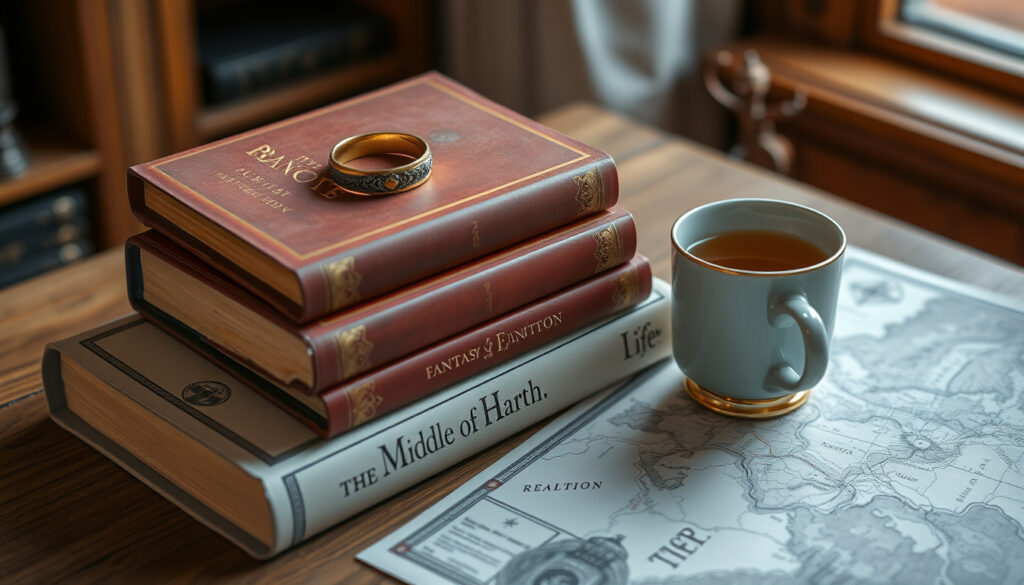
How to Watch The Lord of the Rings in Order
Few film franchises have reshaped a country’s identity the way The Lord of the Rings did for New Zealand. Peter Jackson’s trilogy turned remote sheep farms and volcanic plateaus into the most convincing Middle-earth audiences had ever seen, and the films’ 17 Academy Awards remain the most ever won by a fantasy series.
Total films in the original trilogy: 3 ·
Academy Awards won by The Return of the King: 11 ·
Combined runtime of all three extended editions: ~11 hours 23 minutes ·
Year the first film premiered: 2001 ·
Filming locations across New Zealand: over 150
Quick snapshot
- The Return of the King won 11 Academy Awards (Wikipedia)
- All six films directed by Peter Jackson (Wikipedia)
- Films shot entirely in New Zealand (NZ Film Map)
- Full extent of Irish mythology influence on Tolkien’s writing is debated by scholars (Academia.edu)
- Principal photography ran 438 consecutive days in New Zealand (NZ Film Map)
- Trilogy released one film per year from 2001 to 2003 (Simple English Wikipedia)
- The Rings of Power season 1 debuted in 2022, with future seasons in production (RNZ)
Six films, one franchise, and a clear pattern: the trilogy was released in consecutive Decembers, but the expanded universe now spans three decades of production. Here is a quick reference of the core facts.
| Label | Value |
|---|---|
| Director | Peter Jackson |
| Composer | Howard Shore |
| Total Academy Awards (all 3 films) | 17 |
| Filming country | New Zealand |
| Based on | The Lord of the Rings by J.R.R. Tolkien (1954–1955) |
| Number of films in the franchise | 6 (plus TV series) |
How to watch Lord of the Rings in order?
- Watch The Fellowship of the Ring (2001) — the first release and the narrative foundation.
- Watch The Two Towers (2002) — continues the story as the Fellowship splits.
- Watch The Return of the King (2003) — the conclusion of the War of the Ring.
Release order vs chronological order
- Release order: The Fellowship of the Ring (2001), The Two Towers (2002), The Return of the King (2003) — the order audiences experienced in theaters and the sequence that preserves narrative surprises built into the storytelling (Wikipedia).
- Chronological order places The Hobbit trilogy first, since its story takes place roughly 60 years before the events of The Lord of the Rings within Middle-earth’s timeline.
- The Fellowship of the Ring premiered in London on 10 December 2001 and opened in the United States on 19 December 2001 (Wikipedia).
First-time viewers who start with The Hobbit lose the reveal of the Ring’s significance across the first three films. Release order protects the trilogy’s dramatic architecture.
The implication: release order is the safest bet for first-time viewers.
The Hobbit trilogy and The Rings of Power
- The Hobbit trilogy — An Unexpected Journey (2012), The Desolation of Smaug (2013), The Battle of the Five Armies (2014) — functions as a prequel, but its tone and pacing differ noticeably from the original trilogy.
- The Rings of Power, set thousands of years earlier in the Second Age, debuted on Amazon Prime Video in 2022. Its first season was filmed in New Zealand (RNZ).
The implication: there is no single “correct” order — only the order that matches your tolerance for tonal shifts and your appetite for prequel storytelling.
Should I watch Hobbit or Lord of the Rings first?
Arguments for release order
- Release order preserves the narrative surprises that Peter Jackson built into the trilogy. Watching The Fellowship of the Ring without knowing the Ring’s full history is the experience the filmmakers intended.
- The Hobbit trilogy was produced after The Lord of the Rings and assumes familiarity with the original films. Its visual effects and pacing reflect a later era of filmmaking.
Arguments for chronological order
- Chronological order follows Middle-earth’s internal timeline, starting with Bilbo’s adventure and leading into the War of the Ring.
- Some viewers prefer the straightforward narrative flow: The Hobbit introduces the Ring, and The Lord of the Rings shows its consequences.
The choice depends on your preference for narrative flow versus timeline fidelity.
What are the 6 Lord of the Rings movies?
The original trilogy
- The Fellowship of the Ring (2001) — introduces the Fellowship, the Ring, and the quest to destroy it.
- The Two Towers (2002) — splits the Fellowship into separate storylines across Rohan, Fangorn, and Mordor.
- The Return of the King (2003) — concludes the War of the Ring and the destruction of the One Ring. Won 11 Academy Awards, including Best Picture.
The Hobbit trilogy
- An Unexpected Journey (2012) — Bilbo Baggins joins Thorin’s company to reclaim the Lonely Mountain.
- The Desolation of Smaug (2013) — the company enters Mirkwood and faces the dragon Smaug.
- The Battle of the Five Armies (2014) — the climactic battle over the treasure of Erebor.
All six films were directed by Peter Jackson.
The six films are best understood as two connected trilogies.
Is Lord of the Rings based on Ireland?
Tolkien’s Irish inspirations
- Tolkien acknowledged Irish mythology as an influence on Middle-earth, particularly the legend of Túrin Turambar, which draws from the Irish tale of the Children of Lir (Academia.edu).
- Celtic and Norse mythological elements appear throughout the legendarium, though Tolkien was careful to distinguish his work from direct allegory.
- Tolkien was a practicing Roman Catholic, and his faith shaped the moral and theological framework of Middle-earth.
Filming locations vs fictional geography
- The films were shot entirely in New Zealand, not Ireland. No scenes were filmed in any other country.
- Key locations include Matamata (Hobbiton), Tongariro National Park (Mordor), Upper Hutt (Rivendell), and Queenstown (various wilderness scenes) (IMDb).
- Tourism New Zealand launched a campaign tying Middle-earth imagery to the country’s identity, using the slogan “100% Middle-earth, 100% Pure New Zealand” (Breaking Travel News).
The pattern: Tolkien drew from Irish and Celtic myth, but the visual identity of the films is distinctly New Zealand. The two influences are often conflated by casual viewers, but they belong to different creative domains.
Which trilogy has 17 Oscars?
Breakdown of awards per film
- The Fellowship of the Ring won 4 Academy Awards (Best Cinematography, Best Visual Effects, Best Makeup, Best Original Score).
- The Two Towers won 2 Academy Awards (Best Visual Effects, Best Sound Editing).
- The Return of the King won all 11 Academy Awards it was nominated for, including Best Picture, Best Director, and Best Adapted Screenplay.
The Return of the King clean sweep
- The Return of the King’s 11 wins tied the record for the most Academy Awards ever won by a single film, alongside Ben-Hur and Titanic.
- No other fantasy trilogy has matched the 17 total Oscars won by The Lord of the Rings films.
The 17 Oscars are not just a record — they reflect the Academy’s recognition of the trilogy as a single achievement. The Return of the King’s clean sweep was, in part, a cumulative award for the entire project.
The pattern: the Academy honored the trilogy as a whole, not just the final film.
Timeline
Seven key milestones trace the franchise from development to the streaming era.
- 1995–1997: Initial development by Miramax and later New Line Cinema.
- 11 October 1999 – 22 December 2000: Principal photography for all three films, running 438 consecutive days (NZ Film Map).
- 19 December 2001: The Fellowship of the Ring premieres in the United States.
- 18 December 2002: The Two Towers premieres in New York City.
- 17 December 2003: The Return of the King premieres in Wellington, New Zealand; wins 11 Oscars the following year.
- 2011–2014: The Hobbit trilogy filmed and released.
- 2 September 2022: The Rings of Power debuts on Amazon Prime Video (RNZ).
What this means: the franchise has been in active production for nearly three decades, with New Zealand serving as the constant physical anchor across every screen adaptation.
Clarity section
Confirmed facts
- The Return of the King won 11 Academy Awards.
- Principal photography spanned 438 consecutive days across New Zealand (NZ Film Map).
What’s unclear
- All six films are directed by Peter Jackson.
- The films were shot entirely in New Zealand.
- Tolkien was a practicing Roman Catholic.
- The full extent of Irish mythology’s influence on Tolkien’s writing is debated by scholars; some argue it is overstated relative to Norse and Finnish sources (Academia.edu).
- The long-term cultural impact of Tolkien tourism on Māori communities in New Zealand remains underexplored in mainstream discourse.
These uncertainties highlight the need for further research into the cultural intersections of the franchise.
Quotes
“New Zealand is not a backdrop — it’s a character in the story. The landscape gave us the emotional geography of Middle-earth.”
— Peter Jackson, director (Breaking Travel News)
“The Lord of the Rings is of course a fundamentally religious and Catholic work; unconsciously so at first, but consciously in the revision.”
— J.R.R. Tolkien, author
“The Irish and Celtic elements in Tolkien’s legendarium are real but often misattributed. His primary mythological debt is to Norse and Finnish traditions, with Celtic influences filtering in through specific tales like the Children of Lir.”
— Tolkien scholars, academic commentary (Academia.edu)
Summary
The Lord of the Rings franchise is more than a six-film saga — it is a cultural and geographic phenomenon that reshaped how New Zealand markets itself to the world and how audiences imagine Middle-earth. For first-time viewers planning a marathon, the choice between release order and chronological order comes down to one question: do you want the story as it was unveiled, or as it happened in the timeline? For the traveler tracing the films’ locations, New Zealand offers over 150 real-world sites that grounded Jackson’s vision. The trade-off is clear: release order protects the narrative magic, while chronological order satisfies the lore-seeker.
Related reading: Harry Potter Studios London: 2025 Tickets, Transport & Tips · Where Was The Quiet Man Filmed? Filming Locations Map & Guide
newstalkzb.co.nz, gonomad.com, en.wikipedia.org, en.wikipedia.org
For viewers seeking a comprehensive breakdown, a detailed watch order guide provides additional context on release versus chronological viewing.
Frequently asked questions
How long is the Lord of the Rings extended edition trilogy?
The combined runtime of all three extended editions is approximately 11 hours and 23 minutes. The Fellowship of the Ring extended edition runs 3 hours 48 minutes, The Two Towers runs 3 hours 55 minutes, and The Return of the King runs 4 hours 23 minutes.
Where can I stream The Lord of the Rings movies?
The Lord of the Rings trilogy is available on HBO Max in the United States. The Hobbit trilogy streams on Amazon Prime Video. Availability varies by region, and the films are also available for digital purchase on platforms like Apple TV and Amazon.
Are The Hobbit movies necessary to understand Lord of the Rings?
No. The Lord of the Rings trilogy was written as a standalone story and does not require The Hobbit for comprehension. The Hobbit trilogy adds backstory but is not essential for understanding the plot of the original films.
What is the best order to watch for a first-time viewer?
Release order — The Fellowship of the Ring (2001), The Two Towers (2002), The Return of the King (2003) — is the recommended starting point. It preserves the narrative structure and surprises that the filmmakers designed.
Did Tolkien approve of Peter Jackson’s films?
Tolkien died in 1973, nearly three decades before Jackson’s films began production. He did not live to see any screen adaptation of his work.
Is The Rings of Power connected to the movies?
The Rings of Power is set in the Second Age of Middle-earth, thousands of years before the events of The Lord of the Rings. It shares the same fictional universe but features different characters and storylines, with no direct narrative connection to Jackson’s films.
Why did The Return of the King win 11 Oscars?
The Return of the King won 11 Academy Awards because it was recognized as both a technical achievement and a narrative culmination. The Academy awarded it across all 11 categories it was nominated for, including Best Picture, Best Director, Best Adapted Screenplay, and Best Visual Effects.
These FAQs address common questions about the franchise.
More related posts
 Meghan, Duchess of Sussex: Verified Facts and Key Stories
 Hollie Davidson Partner Helen: Split & Rugby Career Update
 Celtic vs Falkirk Lineups: Confirmed Starting XI and Recap
 National Maternity Hospital Dublin: History & Relocation
 Michael D. Higgins Height: How Tall Is Ireland’s President?
 Shannon Airport Car Park – Prices, Options and Booking Guide
 What Does Retinol Do? Benefits, Uses & Side Effects
 Al-Ittihad Club: History, Rivalries, and Current Stars