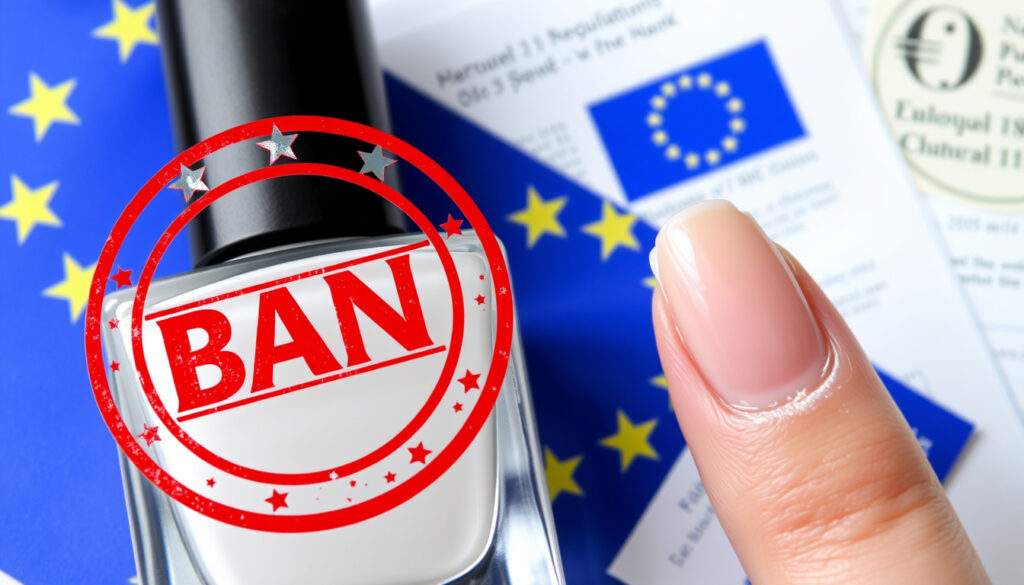
Why I Gel Nail Poli h Banned in Europe? EU TPO Ban Explained
If you’ve ever sat under a UV lamp during a gel manicure and wondered what’s actually in that glossy coating, you’re not alone: Starting September 2025, the European Union is banning a key ingredient in many gel polishes—trimethylbenzoyl diphenylphosphine oxide (TPO)—over concerns it may cause cancer and reproductive harm. Here’s what the ban means for salons, consumers, and your next manicure.
Ban effective date: September 2025 ·
Banned chemical: TPO ·
Regulation: EU REACH ·
Gel polish status: Not banned; only TPO restricted
Quick snapshot
- EU bans TPO in gel nail polish under REACH (European Commission)
- Effective 1 September 2025 (ANSI Blog)
- TPO classified as carcinogenic (Cat 2) and reprotoxic (Cat 1B) — European Commission
- Exact percentage of gel polishes containing TPO is not publicly quantified
- Long-term health impact of TPO-free alternatives still being evaluated
- Whether other countries will follow the EU’s lead remains unknown
- Commission Regulation (EU) 2025/877 published — European Commission
- Ban on placing and making available on the market from 1 Sept 2025 — European Commission
- Existing stock cannot be sold or used after that date — European Commission
- Manufacturers reformulating with TPO-free photoinitiators — Manucurist
- Consumers urged to check labels for TPO-free claims — European Commission
- Other regulators may reassess TPO in cosmetics — ANSI Blog
Five key facts, one theme: the EU is acting on the precautionary principle. Here’s the regulatory breakdown.
| Label | Value |
|---|---|
| Banned chemical | TPO (trimethylbenzoyl diphenylphosphine oxide) |
| Ban regulation | Commission Regulation (EU) 2025/877 under REACH |
| Ban effective | 1 September 2025 |
| Health risks | Carcinogenic (Cat 2), reprotoxic (Cat 1B), DNA damage |
| Gel polish status | Not banned; reformulations expected |
| Reason for ban | Precautionary principle under Article 15(2) of EU Cosmetics Regulation |
| Who is affected | Manufacturers, salons, professional users, consumers |
Why is gel nail polish banned in Europe today?
What ingredient was banned?
- The European Commission’s TPO Q&A (EU Cosmetics Regulation portal) states that TPO (trimethylbenzoyl diphenylphosphine oxide) is prohibited in cosmetic products as of 1 September 2025. TPO is a photoinitiator that allows gel polish to harden under UV or LED lamps, according to an industry explainer from Manucurist (nail polish brand).
- Without TPO or an equivalent photoinitiator, gel polish will not cure properly—so manufacturers are scrambling to find substitutes.
What are the health risks of TPO?
- The EU’s harmonised classification labels TPO as CMR (carcinogenic, mutagenic, reprotoxic), specifically Category 2 carcinogen and Category 1B reproductive toxicant. The European Commission (regulatory authority) says the prohibition follows from this classification.
- PBS NewsHour (U.S. public broadcaster) reported that the chemical potentially causes cancer, damages DNA and/or adversely affects the reproductive system.
“A chemical called TPO is banned across most of Europe over potential fertility issues.” — Euronews report
The ban doesn’t outlaw gel manicures—it forces manufacturers to remove a specific risk ingredient. For consumers, the real hazard may be the UV lamp, not the polish itself.
Bottom line: The EU is not banning gel nail polish—it’s banning TPO, a photoinitiator with known health risks. For European consumers: your gel manicure is still legal, but the ingredient list is about to change.
Is your gel manicure safe?
What does the EU ban mean for you?
- The ban prohibits placing and making available on the market of cosmetic products containing TPO from 1 September 2025. Products already purchased before that date cannot be used in professional settings after the cut-off, per the Commission’s guidance.
- For home users, the ban applies to sale—so you won’t be able to buy TPO-containing polishes after the effective date. Existing personal stock can be used up at your own risk, though experts advise against it.
Can you still get gel manicures in Europe?
- Yes—provided the salon uses TPO-free gel polishes. Many brands have already reformulated. A nail technician quoted by Euronews (European news network) noted that the ban affects only one ingredient, not the entire product category.
- Dermatologist advice from the American Academy of Dermatology (AAD, medical authority) suggests limiting gel manicures to occasional use, applying a broad-spectrum sunscreen to hands before UV exposure, and keeping nails hydrated.
“The EU has banned a key ingredient in gel nail polish as a precaution because it potentially causes cancer, damages DNA and/or adversely affects the reproductive system.” — PBS NewsHour
Bottom line: Your gel manicure can still be safe—if your salon switches to TPO-free products. The UV lamp remains a separate risk that’s worth managing with protective measures.
Is gel nail polish worse for you than regular nail polish?
Health risks of gel vs. regular polish
Both gel and regular nail polish carry trade-offs. Gel requires UV curing, which increases the risk of skin cancer and premature aging on the hands. Regular polish releases solvent fumes (formaldehyde, toluene, dibutyl phthalate) during application and removal, but avoids UV exposure entirely.
Which is safer for long-term use?
Experts from the AAD recommend regular polish as the safer choice for frequent use, provided you apply it in a ventilated area and take polish breaks. Gel is best reserved for special occasions.
Three options, one spectrum: from least to most risk. Here’s how they compare.
| Factor | Regular polish | Gel polish (with TPO) | Gel polish (TPO-free) | Press-on nails |
|---|---|---|---|---|
| UV exposure needed | No | Yes | Yes | No |
| Key chemical concern | Formaldehyde, toluene | TPO (CMR) | Alternative photoinitiators (unknown long-term) | None (adhesive only) |
| Cure time | 10–15 min air dry | 2–3 min under lamp | 2–3 min under lamp | Instant |
| Durability | 3–7 days | 2–3 weeks | 2–3 weeks | 1–7 days |
| Removal | Acetone or non-acetone | Soak in acetone, filing | Soak in acetone, filing | Peel off or warm water |
| Risk of allergic reaction | Low | Moderate (TPO contact allergen) | Unknown for new photoinitiators | Low (adhesive allergy rare) |
Regular polish wins on chemical safety and UV avoidance; gel polishes win on durability. The TPO ban removes one chemical risk from gel, but the UV lamp stays.
Bottom line: For everyday use, regular polish is the safer bet. Gel is fine occasionally—just use sunscreen on your hands before the lamp and choose TPO-free formulas.
What is the healthiest nail polish to wear?
What is the healthiest option for getting nails done?
- Water-based or “breathable” polishes (like those from Zoya or Ella+Mila) are free from the worst offenders: formaldehyde, toluene, dibutyl phthalate, and TPO. They allow moisture and oxygen to pass through the nail, reducing brittleness.
- The AAD advises taking a polish break of 1–2 weeks every few months to let nails recover and repair.
Are fingernails healthier without polish?
- Yes—nails that are left bare are less likely to become dry, brittle, or stained. However, polish isn’t inherently harmful if used sparingly and with breaks. For those who want color, water-based formulas are the gentlest.
For related guidance on skincare ingredients, see our review of retinol benefits and side effects (Ireland Update).
Bottom line: The healthiest nail is a naked nail—but if you must polish, water-based or “5-free” regular polish is the next best thing. Regular breaks are non-negotiable.
What is the alternative to gel nails?
Are acrylic nails or builder gel safer?
- Acrylics contain methacrylates and formaldehyde, which can cause allergic reactions and respiratory irritation. Builder gel (a thicker gel used for extensions) also uses photoinitiators—potentially TPO, unless reformulated.
- Press-on nails have surged in popularity as a non-toxic alternative. They require no UV lamp, no harsh chemicals, and can be reused. A growing number of brands offer custom-fit sets.
What are the best TPO-free gel polishes?
- Brands like Manucurist, OPI (some lines), and CND have announced TPO-free formulations. Look for “TPO-free” on the label or check the ingredient list for trimethylbenzoyl diphenylphosphine oxide.
- For a non-gel option, dip powder nails avoid UV curing but still require cyanoacrylate glue and dust inhalation risks. They are not necessarily healthier.
For a deeper look at beauty product options, check out our guide on Armani Luminous Silk Foundation shades and reviews (Ireland Update)—while not nail-focused, it covers ingredient transparency in beauty.
Bottom line: Press-on nails are the safest alternative for those who want instant, non-toxic nail art. TPO-free gel polishes are a good compromise for durability—if you’re willing to accept the UV lamp risk.
Upsides and downsides of gel vs. alternatives
Upsides
- Gel polish lasts 2–3 weeks with minimal chipping
- TPO ban encourages safer ingredient innovation
- Regular polish offers good safety with minimal risk
- Press-on nails are reusable, affordable, and non-toxic
Downsides
- UV lamp exposure is a separate risk not addressed by the ban
- TPO-free alternatives may still use untested photoinitiators
- Acrylics and dip powders have their own health concerns
- Consumers face confusion over labeling and ingredients
The implication: no single option is perfect; the best choice depends on your priorities—durability, safety, or convenience.
How to do a safer gel manicure at home
- Check the label: Ensure your gel polish is TPO-free. Look for “TPO-free” on the bottle or scan the INCI list.
- Prep your nails: Gently buff the surface, push back cuticles, and clean with alcohol—never use acetone-based products.
- Apply a base coat: Use a TPO-free base coat to protect the nail plate.
- Apply thin layers: Apply two thin coats of TPO-free gel polish, curing each under a UV/LED lamp for the recommended time.
- Finish with top coat: Apply a TPO-free top coat and cure; wipe off sticky residue with alcohol.
- Moisturize: After removal, apply cuticle oil and hand cream to combat dryness.
Bottom line: With TPO-free products and careful steps, you can reduce chemical and UV risks at home.
Frequently Asked Questions
Does the EU ban on TPO affect gel polishes sold outside Europe?
The ban applies only within the EU. However, many international brands reformulate globally to avoid separate supply chains, so TPO-free options may become available worldwide.
Can I still buy gel nail polish that contains TPO in the US?
Yes, the ban is European. In the US, the FDA does not currently restrict TPO in cosmetics, though consumer pressure and the EU precedent may lead to voluntary phase-outs.
How can I tell if my gel polish contains TPO?
Check the ingredient list for “trimethylbenzoyl diphenylphosphine oxide” or “TPO”. Brands that are TPO-free often label it prominently.
Is the UV lamp used with gel manicures dangerous?
UV lamps emit UVA radiation, which can increase skin cancer risk and cause premature aging. Use broad-spectrum sunscreen on hands or wear UV-blocking gloves with cutouts.
What are the symptoms of an allergic reaction to TPO?
Symptoms include redness, swelling, itching, and blistering around the nail area. Some people develop contact dermatitis. Discontinue use and consult a dermatologist if symptoms occur.
Are there any TPO-free gel polishes that are widely available?
Yes, brands like Manucurist, OPI, and CND offer TPO-free lines. Look for “TPO-free” on the label or check online retailers.
Do press-on nails offer a safer alternative to gel?
Press-on nails eliminate UV exposure and harsh chemicals. They are generally safe, though some people may react to the adhesive. They are reusable and inexpensive.
Overall takeaway: The TPO ban is a step toward safer cosmetic regulation, but consumers should still weigh UV risks and choose products wisely. The healthiest nail care starts with informed choices.
More related posts
 Ford Focus for Sale in Ireland | 1,971 DoneDeal Listings
 Bank Holiday Pay Ireland: Rules, Calculations & Entitlements
 EuroMillions Plus Winning Location: Where Was It Sold
 Low Fade Haircut Men: Top Styles, Barber Tips & Age Guide
 Greek Yogurt with Honey Near Me – Stores, Brands, Nutrition
 What Is Solar Power? How It Works, Pros & Cons
 Snow Weather Warning Ireland – Met Éireann Yellow Alert for 11 Counties
 Clear Blue Pregnancy Test: Accuracy, Timing, and Results