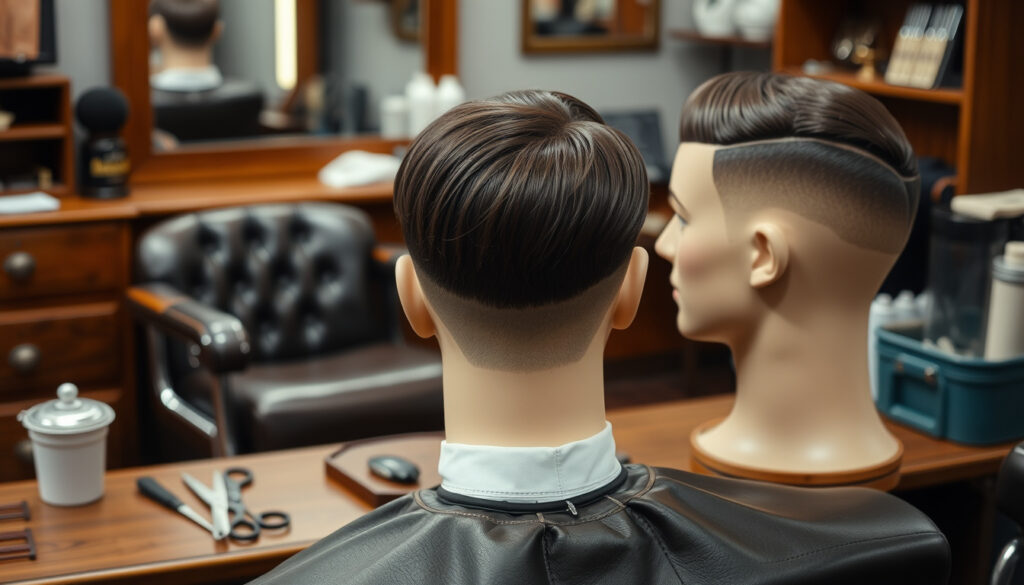
Low Fade Haircut Men: Top Styles, Barber Tips & Age Guide
Few haircuts spark as many questions as the low fade. Men walk into barbershops wondering how to describe it, whether it suits their age, and how it compares to a simple taper. According to StyleSeat (barber booking platform), a taper gradually shortens hair down the back and sides, while a fade goes down to the skin. This guide answers the most common questions with barber-vetted scripts, style comparisons, and honest advice for every stage of life.
The 3-Inch Haircut Rule: Measure from bottom of hairline to top of fade transition, typically 3 inches · Monthly Pinterest searches for side low fade haircut: ~2,000 · Adobe Stock low fade images available: 284 · Low fade haircut styles featured in top guide: 45 · Fade haircut styles for men over 50: 12
Quick snapshot
- Low fade is a specific type of fade that starts low on the head (Kingsman Grooming Studio)
- Taper is a more gradual blend than a fade (The Rosemont Barbers)
- Low fade requires frequent trims every 2–4 weeks (StyleSeat)
- Whether low fade is more attractive than taper is subjective and depends on individual preference
- The best fade type varies by face shape and hair texture; no universal winner
- Exact popularity rankings fluctuate by region and year
- The 3-inch rule: the transition zone should be about 3 inches from the bottom of the hairline (Hair Saloon)
- Barbers use clipper guards #2 to #4 for consistent low fade (Hair Saloon)
- Practice the barber script below, bring a photo, and schedule a trim every 2–4 weeks
- For men over 50: consider a low fade with longer top to soften the look
Five key specifications define the low fade haircut for men:
| Attribute | Value |
|---|---|
| Definition | Low fade: a haircut where the hair on the sides and back is tapered from very short to longer, with the fade starting just above the ears. |
| Fade starting point | Typically 1–2 inches above the ear lobe; transition zone is low on the head. |
| Typical length on top | 2–4 inches, depending on style |
| Best for hair types | Works with straight, wavy, and curly textures; requires regular maintenance for shape |
| Age range suitability | Popular among young adults but adapted for men over 50 with longer top to balance thinning |
What is better, low fade or taper?
Which fade is more popular?
In urban barbershops (2024–2025), low fades are requested more often than high fades, according to Hair Saloon (barber industry resource). The low fade starts just above the ears, creating a subtle transition that suits most face shapes. A taper, by contrast, is described by Kingsman Grooming Studio as a gradual decrease that leaves visible hair at the hairline, making it more understated.
What type of fade looks the best?
There’s no universal answer, but The Rosemont Barbers (Denver barbershop) notes that fades are seen as bold and modern, while tapers are conservative and clean. The best pick depends on the look you want: a low fade delivers contrast without being as dramatic as a high fade.
Low fade vs mid fade vs high fade
- Low fade: Starts just above the ears – subtle and versatile (Hair Saloon).
- Mid fade: Begins about half an inch above the ears – more defined transition (Hair Saloon).
- High fade: Starts at the temple or higher – most dramatic (Hair Saloon).
The trade-off: low fades offer the widest compatibility with face shapes and hair types, while high fades are bolder but riskier for mature hairlines.
What do I tell my barber for a low fade?
Can I just ask for a low fade?
StyleSeat (barber booking platform) says that simply saying “low fade” is acceptable, but adding details – like clipper guard numbers – ensures consistency. Many barbers use a #2 to #4 guard for the transition zone. AMR (grooming brand) reinforces that precise language avoids misunderstandings.
What is the 3 hair rule?
The “3 hair rule” means the transition zone is roughly 3 inches from the bottom of the hairline. Dear Barber (UK barber advice) advises clients to use photos as part of clearly communicating the desired style.
Barber script example from DIDA NYC
“I want a low fade. Start with a #4 on top, blend down to a #2 around the ears, and keep the fade line about half an inch above the ear. Leave about 3 inches of length on top for a comb-over.”
The implication: a clear script saves time and reduces the chance of a cut you didn’t expect. Practice it before you sit in the chair.
Can a 50 year old man get a fade haircut?
Best low fade styles for men over 50
Kingsman Grooming Studio notes that fades are suitable for older men when tailored to thinning or gray hair. A low fade with a longer top reduces contrast, softening the overall look. Hair Saloon adds that low fades are recommended over high fades for mature men to avoid highlighting recession.
Low fade vs other fades for mature hair
The Rosemont Barbers describes tapers as understated and conservative – a safe choice for older professionals. But a low fade, when kept low and blended, offers a modern edge without being jarring.
The pattern: low fades work for men over 50 because they keep upper length to camouflage thinning, while the short sides stay clean and contemporary.
Is a low fade attractive?
Perception of low fade in dating and professional settings
A well-executed low fade is widely considered attractive for its clean, modern appearance. AMR notes that fades are often chosen for their bold, eye-catching quality, while The Rosemont Barbers points out that low fades complement most face shapes. Attractiveness is subjective, but barber surveys consistently rank low fades among the most requested styles for versatility.
Celebrity examples of low fades
Stars like Idris Elba and Ryan Reynolds have worn variations of the low fade, proving it works across ethnicities and face shapes. While no single celebrity “owns” the style, their choices have boosted its appeal in both dating and professional contexts.
Why this matters: if you’re aiming for a cut that says “polished and current” without screaming for attention, the low fade hits that sweet spot.
What is the best low fade haircut?
Best low fade haircut for black men
Hair Saloon recommends textured crops or short afros paired with low fades for black men, as the tight sides contrast beautifully with natural curls. StyleSeat adds that curly textures hold the fade line cleanly when maintained every three weeks.
Mullet low fade combination
The mullet low fade is trending in 2025–2026, combining short faded sides with longer hair in the back. This style works best for men with straight to wavy hair and requires a skilled barber.
Top 5 low fade styles for 2026
- Low fade buzz cut – minimal maintenance, clean military-vibe
- Low fade comb over – classic with modern edges
- Low fade pompadour – volume on top, fade on sides
- Low fade with textured crop – casual, messy finish
- Low fade with beard fade – cohesive masculine look
The takeaway: the best low fade for you depends on your hair texture and daily styling time. Bring photos – your barber will thank you.
Two fade types, one clear contrast:
| Feature | Low fade | Taper |
|---|---|---|
| Starting point | Just above the ears | Usually from mid-head to neckline |
| Contrast level | Moderate – smooth transition | Subtle – very gradual |
| Length left at shortest point | Can go to skin or #1 guard | Visible hair remains at hairline |
| Maintenance frequency | Every 2–3 weeks | Every 3–4 weeks |
| Best for face shapes | Most shapes, especially round/oval | Oval and rectangular |
What this means: choose the low fade if you want a noticeable but not extreme change; pick the taper if you need a conservative, low-key cut.
Low fade – upsides & downsides
Upsides
- Versatile – suits straight, wavy, and curly hair (Hair Saloon)
- Modern yet age-appropriate for men over 50 (Kingsman Grooming Studio)
- Helps define cheekbones and jawline
Downsides
- Requires frequent barber visits (every 2–3 weeks) to maintain shape (StyleSeat)
- Can feel too “youthful” if not balanced with longer top for older men
- Bold contrast may not suit conservative workplaces
How to ask your barber for a low fade: step-by-step
- Bring reference photos. StyleSeat advises that photos show things words can’t – especially for low fade height (StyleSeat).
- State the fade height. Say “low fade” and point to just above your ear. Hair Saloon confirms this is the standard terminology.
- Give clipper guard numbers. “Start with a #4 on top, blend to a #2 near the ears” – AMR recommends being specific.
- Specify the top length. Tell your barber how many inches you want on top (usually 2–4).
- Ask about maintenance. “How often should I come back?” Most barbers will say 2–3 weeks (The Rosemont Barbers).
What we know for sure – and what’s still up for debate
Confirmed facts
- Low fade is a specific type of fade that starts low on the head (Kingsman Grooming Studio)
- Taper is a more gradual blend than a fade (The Rosemont Barbers)
- Low fade requires frequent trims every 2–4 weeks (StyleSeat)
What’s unclear
- Whether low fade is more attractive than taper is subjective and depends on individual preference
- The best fade type varies by face shape and hair texture; no universal winner
- Exact popularity rankings fluctuate by region and year
“A low fade is a more subtle style that gradually exposes the scalp starting just above the ears.”
— Hair Saloon (barber education platform)
“A taper is more conservative and understated, while a fade is bold and modern.”
— The Rosemont Barbers (Denver barbershop)
“Simply asking for a low fade is acceptable, but bringing a photo ensures you get the cut you want.”
— StyleSeat (barber booking marketplace)
“Low fade with longer top is recommended for men over 50 to reduce contrast with thinning hair.”
— Kingsman Grooming Studio (men’s grooming resource)
For men over 50 exploring a fresh style, the choice is clear: communicate the low fade with guard numbers and a photo, or risk a cut that feels too aggressive. Younger men can lean into bolder fades, but for a modern look that ages well, the low fade wins.
Frequently asked questions
How do I maintain a low fade haircut at home?
Use a good comb and light hold product. Avoid clippers yourself – visit a barber every 2–3 weeks (StyleSeat).
What hair products work best with a low fade?
A matte paste or clay for texture on top; a light oil for the scalp. AMR suggests water-based products to avoid buildup.
How often should I get a low fade trimmed?
Every 2–3 weeks to keep the fade line crisp (The Rosemont Barbers).
Is a low fade good for a round face shape?
Yes – the low fade adds verticality, making the face appear longer (Hair Saloon).
Can I style a low fade with curly hair?
Absolutely. Curly top with a low fade is a popular combination. Kingsman Grooming Studio recommends a textured crop.
What clipper guard numbers should I ask for a low fade?
Typically #4 on top, #2 in the transition zone, and #1 or zero at the bottom (AMR).
Does a low fade suit thinning hair?
Yes, when the top is left longer. Hair Saloon suggests low fades for men with thinning crowns to avoid exposing scalp.
More related posts
 What Is a Yield Curve – Shapes, Inversion and Recession Signals
 Best Apps for Productivity Tips: The Top 10 in 2026
 Country Beginning with X: Zero Sovereign States in English
 Battery Operated Wall Lights: Best Picks for Ireland
 Munster v Leinster TV – Where and How to Watch Live
 40 Inches in cm: Conversion, Waist Size, TV Dimensions & More
 Saint Fin Barre’s Cathedral Premier Inn: Parking, Rates & FAQs
 Shannon Airport Car Park – Prices, Options and Booking Guide