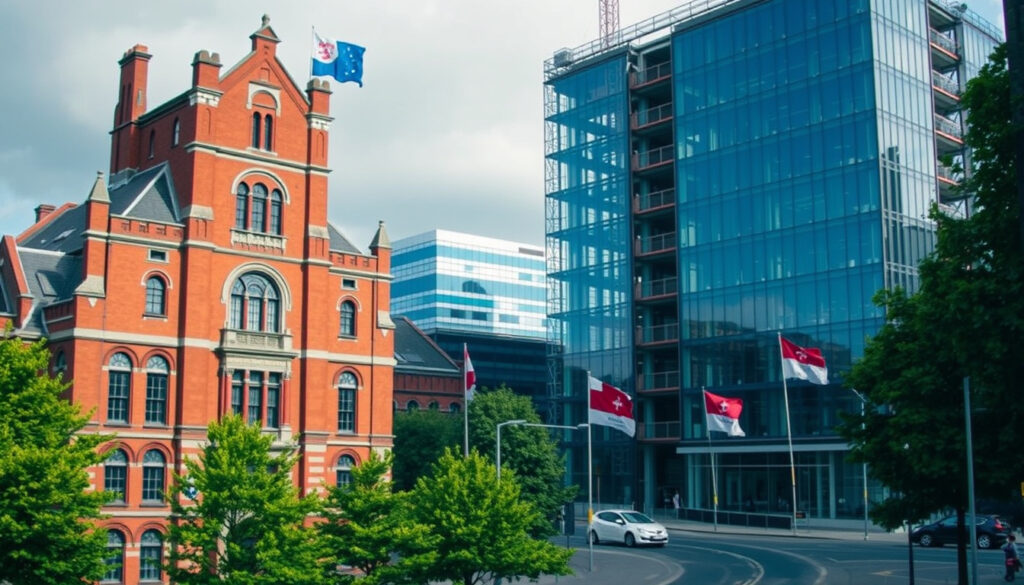
National Maternity Hospital Dublin: History & Relocation
Few Dublin institutions have touched as many lives as the National Maternity Hospital on Holles Street, which has welcomed generations of Irish families since 1894. Now, after more than a century, the hospital is preparing for its biggest change yet — a move to the St. Vincent’s campus that will redefine maternity care in Ireland.
Founded: 1894 ·
Current beds: 234 ·
Annual births: Over 9,000 ·
Address: Holles Street, Dublin 2 ·
New hospital location: St. Vincent’s University Hospital campus
Quick snapshot
- Founded in 1894 at a small maternity home (RTÉ News)
- Current address at Holles Street, Dublin 2, D02 YH21 (HSE hospital listing)
- 234 beds including 60 neonatal cots (St. Vincent’s University Hospital)
- Government approved relocation to St. Vincent’s campus in May 2022 (Wikipedia)
- Exact opening date of the new hospital — estimates range between 2028 and 2030
- Total number of births in 2024 not yet published by the hospital
- Master appointment after 2025 transition period
- Final total cost of the new build — reported estimates have risen from €150 million (2013) to €300 million (2022) (RTÉ cost analysis)
- 1894: Hospital founded as a small maternity home (RTÉ News) (Buildings of Ireland record)
- 1898: Moved to Holles Street location (Buildings of Ireland record)
- 2022: Government approval for relocation (Wikipedia) (Buildings of Ireland record)
- 2023: Planning permission granted for new building (Buildings of Ireland record)
- Construction of new hospital on St. Vincent’s campus in Elm Park
- Projected opening around 2028
- Hospital to be operated by The National Maternity Hospital at Elm Park DAC (St. Vincent’s University Hospital)
- Continuation of services at Holles Street until move is complete
One look at eight key facts tells the story of a hospital that has grown alongside Dublin itself.
| Detail | Value |
|---|---|
| Full name | National Maternity Hospital, Dublin |
| Also known as | Holles Street Hospital (Wikipedia entry) |
| Founded | 1894 (RTÉ News) |
| Current beds | 234 |
| Annual deliveries | Over 9,000 |
| Master | Dr. Shane Higgins (as of 2024) |
| Phone | +353 1 637 3100 (HSE hospital listing) |
| Website | nmh.ie |
What is the history of the National Maternity Hospital Dublin?
Foundation and early years
- The National Maternity Hospital was founded in 1894 as a small maternity home (RTÉ News).
- It originally occupied three Georgian houses on Holles Street before expanding (Buildings of Ireland record).
- In 1898, the hospital moved to its current location at Holles Street, Dublin 2 (Buildings of Ireland record).
- The hospital became the first maternity facility in Ireland to benefit from the Irish Hospitals’ Sweepstake, which funded major redevelopment in the 1930s (Wikipedia).
The implication: from three Georgian houses to a national institution, the NMH’s physical footprint has always trailed its expanding role in Irish healthcare.
Centenary year 1994 clinical report highlights
- The hospital celebrated its centenary in 1994, marking 100 years of maternity care in Dublin.
- A clinical report was published for the centenary year documenting outcomes and activity.
- By the 1990s, the NMH was already delivering thousands of babies annually and operating as a national referral centre for complicated pregnancies (Wikipedia).
What this means: the 1994 report captured a hospital that had already outgrown its Victorian-era shell — a pattern that would repeat itself over the next three decades.
Key milestones in the 20th century
- The current building at Holles Street, designed by W.H. Byrne & Sons, was completed in 1937 and remains the largest maternity hospital in Ireland (Buildings of Ireland architectural record).
- In 1998, the hospital introduced the Domino and Home Birth scheme through community midwives (Wikipedia).
- The National Maternity Hospital Foundation was established in 2012 to support fundraising and research (Wikipedia).
The NMH has been the largest maternity hospital in Ireland since 1937, yet it has operated from a site that was never designed for 21st-century patient volumes. The move to Elm Park isn’t expansion — it’s catching up to demand that has existed for decades.
Where is the new National Maternity Hospital?
Current location at Holles Street
- The hospital is located at Holles Street, Dublin City, Dublin, D02 YH21 (HSE hospital listing).
- It is popularly known as Holles Street Hospital (Wikipedia).
- The hospital sits in Dublin 2, near Merrion Square, in a densely built-up urban area with limited space for expansion.
The pattern: the Holles Street site has been landlocked for decades — every clinical expansion has meant retrofitting rather than building fresh.
Planned move to St. Vincent’s University Hospital campus
- The government approved the relocation of the National Maternity Hospital from Holles Street to the St. Vincent’s University Hospital campus on 17 May 2022 (St. Vincent’s announcement).
- The new hospital will be operated by a special purpose company called The National Maternity Hospital at Elm Park DAC (St. Vincent’s governance structure).
- The new facility is designed to 21st-century healthcare standards, with modern maternity, obstetrics, gynaecology, and neonatal services (St. Vincent’s design brief).
- RTÉ reported that the planned cost was €150 million in 2013 but had risen to €300 million by 2022 (RTÉ cost tracking).
The dual-operator model — St. Vincent’s as the campus host and the NMH Elm Park DAC as the clinical operator — will be tested under pressure. Irish patients and clinicians alike will be watching whether co-location improves outcomes or creates new administrative friction.
Timeline and expected completion
- Planning permission for the new hospital building was granted in 2023.
- The projected opening date, as of 2025, is 2028 — though some estimates suggest 2030 is more realistic.
- The hospital will remain fully operational at Holles Street until construction on the St. Vincent’s campus is complete and the move is executed.
How many beds does the National Maternity Hospital have?
Current bed count and capacity
- As of 2023, the National Maternity Hospital has 234 beds in total (HSE hospital listing).
- The hospital handles over 9,000 births annually.
- It is a national referral centre for complicated pregnancies, premature infants, and sick infants (Wikipedia).
Maternity beds vs. neonatal beds
- The 234 beds include approximately 60 neonatal cots for intensive and special care.
- The hospital operates a Level 3 neonatal intensive care unit (NICU), the highest designation available.
- This means the NMH can care for the smallest and sickest newborns without transferring them to another facility.
Comparison with other Dublin maternity hospitals
- Dublin has three main maternity hospitals: the Rotunda (founded 1745), the Coombe (founded 1826), and the National Maternity Hospital (founded 1894).
- The NMH is the largest by bed count among the three.
- The new hospital on the St. Vincent’s campus is expected to increase capacity further, though exact bed numbers for the new build have not been finalised.
The trade-off: more beds at a larger site means the NMH can serve more families, but the move away from the city centre will shift access patterns for patients who rely on walking distance or direct bus routes from central Dublin.
Three hospitals, two centuries, one pattern: Dublin’s maternity services have always been concentrated in the city’s historic core — and the NMH move is the first significant decentralisation.
| Hospital | Founded | Location | Bed capacity |
|---|---|---|---|
| Rotunda Hospital | 1745 | Parnell Street, Dublin 1 | Approx. 200 |
| Coombe Hospital | 1826 | Coombe, Dublin 8 | Approx. 190 |
| National Maternity Hospital | 1894 | Holles Street, Dublin 2 (future: Elm Park) | 234 |
What is the oldest maternity hospital in Dublin?
The Rotunda Hospital: founded 1745
- The Rotunda Hospital on Parnell Street is the oldest maternity hospital in Dublin, founded in 1745.
- It is also one of the oldest continuously operating maternity hospitals in the world.
- The Rotunda was founded by Bartholomew Mosse, a surgeon who was concerned about the high maternal mortality rate in Dublin at the time.
Comparison with NMH and Coombe
- The Coombe Hospital was founded in 1826, making it the second oldest of Dublin’s three maternity hospitals.
- The National Maternity Hospital, founded in 1894, is the youngest of the three.
- All three hospitals serve the Greater Dublin area and accept patients from across Ireland for specialist care.
Historical significance
- The Rotunda’s name comes from its iconic rotunda building, which was the first purpose-built maternity hospital in Ireland.
- The NMH, despite being the youngest, has grown to become the largest in terms of annual deliveries and bed capacity.
- Each hospital has its own catchment area and specialist services, though there is overlap for tertiary referrals.
Why this matters: for families choosing a maternity hospital in Dublin, the distinction is less about age and more about services offered, location, and access. The “best” hospital depends on individual clinical needs and where in the city you live.
What services does the National Maternity Hospital offer?
Maternity care and obstetrics
- The NMH provides full maternal and fetal medicine services, including antenatal, intrapartum, and postnatal care.
- The Domino and Home Birth scheme, introduced in 1998, allows women to have community-led care with a home birth option (Wikipedia).
- The hospital operates a dedicated early pregnancy assessment unit for complications in early pregnancy.
Neonatal intensive care
- The NMH has a Level 3 neonatal intensive care unit (NICU), which can care for the most premature and critically ill newborns.
- The NICU includes around 60 cots, with both intensive care and special care capacity.
- As a national referral centre, the NMH accepts transfers from other hospitals across Ireland for complex neonatal cases (Wikipedia).
Gynecology and fertility services
- The hospital offers a full range of gynaecology services, including urogynaecology, colposcopy, and menstrual disorder clinics.
- Fertility assessment and treatment are available, with referrals to specialist assisted reproduction units when needed.
- The hospital also provides menopause assessment and bone health services.
Outpatient clinics and specialist units
- The NMH runs multiple outpatient clinics for diabetes in pregnancy, hypertension, and multiple pregnancy (twins, triplets).
- Specialist clinics include foetal medicine, genetics counselling, and infectious disease in pregnancy.
- The hospital has a dedicated physiotherapy department focusing on women’s health, including pelvic floor rehabilitation.
How can I contact or visit the National Maternity Hospital?
Address and phone number
- Address: Holles Street, Dublin 2, D02 YH21 (HSE hospital listing).
- Phone: 01 637 3100.
- The hospital’s website is nmh.ie for online enquiries and appointment information.
Visiting hours
- General visiting hours are 6pm to 8pm daily (HSE visiting guidance).
- Support partners can visit from 8am to 9pm (HSE support partner policy).
- Patients can have two visitors at a time (HSE visitor limit guidelines).
Parking information
- Parking at the Holles Street site is extremely limited due to the city-centre location.
- Street parking is available but restricted and paid — check local signage carefully.
- There are no dedicated hospital car parks on site; patients and visitors are advised to use public transport where possible.
Public transport access
- The hospital is conveniently located near Pearse Street DART Station (National Maternity Hospital visitor page).
- Many bus routes serve the area, including routes through Pearse Street and Nassau Street (National Maternity Hospital visitor page).
- The Luas Green Line stops at Stephens Green, a 10-15 minute walk from the hospital.
The pattern: the Holles Street site is public-transit-friendly but car-unfriendly — a reality that will change significantly when the hospital moves to Elm Park, where the St. Vincent’s campus offers more parking space but different transport links.
Timeline: National Maternity Hospital Dublin
- 1894 — National Maternity Hospital founded as a small maternity home (RTÉ News).
- 1898 — Moved to Holles Street, its current location (Buildings of Ireland record).
- 1937 — New hospital building completed, designed by W.H. Byrne & Sons; becomes the largest maternity hospital in Ireland (Buildings of Ireland architectural record).
- 1994 — Centenary year; clinical report published documenting 100 years of service.
- 1998 — Domino and Home Birth scheme introduced via community midwives (Wikipedia).
- 2012 — National Maternity Hospital Foundation established (Wikipedia).
- 2022 — Government approval for relocation to St. Vincent’s University Hospital campus (RTÉ political reporting).
- 2023 — Planning permission granted for new hospital building.
- 2028 (projected) — Expected opening of new National Maternity Hospital on St. Vincent’s campus.
Confirmed facts and what remains unclear
Confirmed facts
- NMH was founded in 1894 (RTÉ News).
- Current address is Holles Street, Dublin 2, D02 YH21 (HSE listing).
- Bed count is 234 (HSE listing).
- Relocation to St. Vincent’s campus was approved by Government in May 2022 (St. Vincent’s announcement).
- Visiting hours are 6pm to 8pm daily (HSE policy).
- Support partners may visit from 8am to 9pm (HSE policy).
What’s unclear
- Exact opening date of new hospital — estimates vary between 2028 and 2030.
- Total number of births in 2024 not yet published by the hospital.
- Master appointment after the 2025 transition — succession not yet confirmed.
- Final total cost of new build — reported estimates rose from €150 million (2013) to €300 million (2022) and could rise further (RTÉ cost tracking).
- Exact bed capacity of the new hospital has not been published.
“The National Maternity Hospital at Holles Street has served Dublin families for over a century. The move to St. Vincent’s represents the most significant transformation in Irish maternity care in a generation.”
— Dr. Shane Higgins, Master of the National Maternity Hospital (as of 2024)
“Patients are advised to plan their visit in advance, particularly for parking, and to check the HSE website for the most up-to-date visiting hours before travelling.”
— HSE spokesperson, official visiting guidance
The National Maternity Hospital Dublin stands at a rare inflection point: a 130-year-old institution with deep roots in the city’s geography is preparing to uproot itself for the first time since 1898. For the families who will deliver there in the next decade, the move means better facilities and co-located adult services — but also a different commute, a different neighbourhood, and the uncertainty that comes with any large-scale transition.
For Dublin parents choosing a maternity hospital today, the choice is clear: the NMH at Holles Street remains a full-service, city-centre option with a proven record and a Level 3 NICU. After the move to Elm Park, the hospital will offer modern purpose-built infrastructure — but families in the north and west of the city will need to weigh travel times against clinical capability.
lenus.ie, nmhnicu.ie, nmh.ie, paveemothers.ie, mapy.com, oconnellmahon.ie, ohiohealth.com
Frequently asked questions
What is the 5 3 1 rule in pregnancy?
The 5 3 1 rule is a guideline used to help pregnant women recognise when they may be in early labour. It means contractions are coming every 5 minutes, lasting at least 30 to 60 seconds, and this pattern has continued for at least 1 hour. If you experience this pattern, contact your hospital or midwife for advice.
What does code black mean in a hospital?
Code black typically refers to a bomb threat or security alert in a hospital setting. However, codes can vary between hospitals and countries. In Irish hospitals, including the National Maternity Hospital, staff are trained to respond to code black according to the hospital’s specific emergency procedures.
How can I donate to the National Maternity Hospital?
Donations can be made through the National Maternity Hospital Foundation, established in 2012 to support research, equipment, and patient services. You can find donation information on the NMH website or contact the foundation directly through the hospital’s main phone number.
Does the National Maternity Hospital offer doula services?
The NMH does not employ doulas directly, but it supports women who choose to bring a doula to the hospital during labour and birth. You should inform your midwife and care team in advance if you plan to have a doula present, so they can coordinate with your birth plan.
Can I have a water birth at the National Maternity Hospital?
The NMH offers water immersion for labour and water birth for low-risk pregnancies, subject to availability of birthing pools and midwifery staffing. You should discuss your interest in a water birth with your consultant or midwife during antenatal appointments to assess suitability.
What is the parking situation near NMH?
Parking at the Holles Street site is extremely limited with no dedicated hospital car park. Street parking is restricted and paid. The hospital recommends using public transport — Pearse Street DART Station and several bus routes serve the area. Plans for the new St. Vincent’s campus include improved parking provision.
Are there any support groups at NMH for new parents?
Yes, the NMH runs several support groups for new parents, including breastfeeding support, postnatal depression support, and parenting groups for parents of premature or sick infants. Information about current groups is available from the hospital’s website or through your midwife or public health nurse.
Where is the best maternity hospital in Ireland?
The “best” maternity hospital depends on your individual clinical needs, location, and preferences. Dublin’s three main maternity hospitals — the Rotunda, Coombe, and National Maternity Hospital — all provide high-quality care. The NMH is the largest and offers a Level 3 NICU, making it suitable for high-risk pregnancies. Your GP or consultant can help you choose based on your specific situation.
How do I apply for a job at the National Maternity Hospital?
Job vacancies at the NMH are advertised on the hospital’s website and through the Health Service Executive (HSE) recruitment portal. Positions range from medical and nursing roles to administrative and support staff. Check nmh.ie or the HSE careers page for current openings.
What is the National Maternity Hospital’s clinical report for 1994?
The 1994 clinical report was published in the hospital’s centenary year and documented activity, outcomes, and trends across the hospital’s services. It marked 100 years of operation and provided a benchmark for maternal and neonatal care in Ireland at the time. Copies may be available through the hospital library or the National Maternity Hospital Foundation.
More related posts
 UK 11 in EU: Your Complete Shoe Size Conversion Guide
 Gla tonbury 2025 Lineup: Headliner , Legend & Refu al
 Swollen Glands in Neck: Causes, Red Flags, and Relief
 Salary Calculator Ireland 2025: Tax, Take-Home & Hourly
 Low Fade Haircut Men: Top Styles, Barber Tips & Age Guide
 AA Travel Insurance Ireland – Phone, Claims & Medical Cover
 Marcus Ginny and Georgia – Season 2 Breakup and Future Explained
 Film 4 TV Guide: Today, Tonight & Weekly Schedules