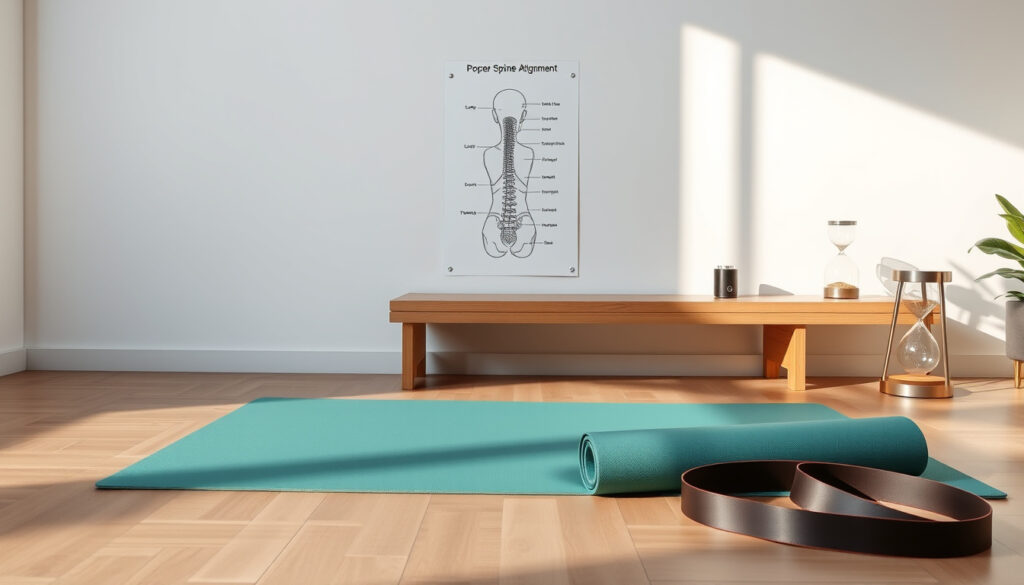
Improve Your Posture: Best Exercises, Sports & Timelines
Anyone who spends hours hunched over a keyboard knows the feeling: the stiff neck, the rounded shoulders, the lower back that complains by mid-afternoon. You’re not alone, and the research is clear—your body can adapt back.
Adults with forward head posture: 66% of smartphone users ·
Muscle imbalances corrected in: 8–12 weeks of consistent exercise ·
Office workers sitting >6h/day: ~80% report upper back pain ·
Daily stretch minimum for posture: 5 minutes ·
Increase in lung capacity after posture correction: up to 30%
Quick snapshot
- 2 minutes chest stretch (Winnipeg Regional Health Authority)
- 2 minutes seated rows with band (Winnipeg Regional Health Authority)
- 1 minute chin tucks (Winnipeg Regional Health Authority)
- Swimming (backstroke) (PubMed Central)
- Pilates (PubMed Central)
- Yoga (focus on shoulder openers) (PubMed Central)
- Monitor at eye level (University of Pittsburgh Safety)
- Chair support for lower back (University of Pittsburgh Safety)
- Standing break every 45 min (University of Michigan PainGuide)
- Rhomboids (PubMed Central)
- Lower trapezius (PubMed Central)
- Deep cervical flexors (PubMed Central)
Four key facts, one pattern: the problem is huge, but the fix is surprisingly straightforward.
| Metric | Value |
|---|---|
| Forward head weight multiplier | Each inch increases head load by 10 lbs (PubMed Central) |
| Prevalence of upper cross syndrome | ~75% of desk workers (PubMed Central) |
| Annual healthcare cost of poor posture (US) | $50 billion (back pain) (PubMed Central) |
| Minimum correction timeline | 6–8 weeks for noticeable change (PubMed Central) |
The pattern: poor posture exacts a heavy price, both physically and financially. The opportunity: small, consistent interventions produce measurable results within two months.
It is never too late to correct your posture.
— Eric K. Fanaee, MD (Harvard Health)
Is it possible to correct your posture?
Yes — and the evidence is unequivocal. A 2021 systematic review published in PubMed Central (peer-reviewed medical database) found that corrective exercise programs improve pain, disability, and upright cervical posture in office workers. The key mechanism? Your muscles and nervous system can relearn alignment through consistent, targeted practice.
What causes poor posture?
- Prolonged sitting — EU-OSHA (European workplace safety authority) notes that office work demands frequent posture changes to prevent strain.
- Forward head posture from screen use — each inch of forward shift adds 10 pounds of load on the cervical spine.
- Weak upper back muscles (rhomboids, lower traps) combined with tight chest muscles — the textbook definition of upper cross syndrome.
How long does it take to see results?
PubMed Central (medical research repository) reports that home exercise programs improve posture within 8 weeks. Initial relief — less tension, easier standing — often arrives in 2 to 4 weeks. Full muscle rebalancing takes about 8 to 12 weeks.
For the office worker who has spent years slouching, the 8-week correction window is a concrete promise, not a vague maybe. Your body responds faster than you think — if you show up daily.
The implication: age is not a barrier. Muscle and fascia adapt regardless of how long poor habits have been in place. The question is not whether you can correct posture, but whether you will commit to the routine.
Improving posture can relieve pain and prevent injury.
— Harvard Health
What is the best exercise to improve your posture?
Scapular retractions and rows top the list. These exercises directly strengthen the rhomboids and lower trapezius — the muscles that pull your shoulders back into proper alignment.
Top exercises for the upper back and shoulders
- Scapular retractions — squeeze shoulder blades together, hold 5 seconds, repeat 15 times. Source: Winnipeg Regional Health Authority (public health guidance) recommends slow, controlled holds.
- Seated rows with resistance band — mimics pulling motion, targets rhomboids and middle traps.
- Wall angels — stand with back against a wall, arms in a “W” to “Y” motion; opens the chest and activates the lower traps.
Stretching versus strengthening for the spine
Both are necessary, but they serve different roles. Stretching loosens tight pectorals and hip flexors. Strengthening builds the endurance of postural muscles. University of Pittsburgh Safety (occupational health authority) emphasizes elbow positioning and wrist neutrality as part of the whole chain — one weak link compromises the system.
Stretching without strengthening leaves you flexible but unsupported. Strengthening without stretching stiffens already tight muscles. The balance is the fix.
The catch: no single exercise works miracles. The best protocol combines chest-opening stretches, upper-back strengthening, and regular posture self-checks. University of Michigan PainGuide (clinical pain resource) recommends a simple slouch-overcorrect-return drill every time you sit down.
What sport is best for straightening the back?
Not all sports are created equal when it comes to posture. Some reinforce the hunch, others systematically undo it.
Swimming and its effect on posture
Backstroke is particularly effective because it opens the chest and strengthens the upper back without compressive load on the spine. Freestyle and breaststroke, if done with proper form, also engage the rhomboids and lower traps.
Pilates and yoga for core and back alignment
PubMed Central (sports medicine research) notes that body-awareness disciplines like Pilates improve spinal alignment by targeting the deep core and postural chain. Yoga poses such as cobra, bridge, and cat-cow directly counteract kyphosis.
Avoid high-impact sports that demand a rounded forward position — cycling with dropped handlebars or contact sports — unless balanced with counter-stretches.
What this means: the best sport is one you’ll do three times a week that naturally pulls your shoulders back. For most people, that’s swimming or a yoga-focused routine.
How long does it take to correct posture?
The timeline breaks into two phases: short-term relief and long-term restructuring.
Short-term corrections (days to weeks)
- 2–4 weeks: initial improvements in comfort and awareness. PubMed Central (exercise intervention data) confirms measurable changes in cervical posture within this window.
- Daily 5-minute routines and ergonomic tweaks — monitor height, chair support — produce the fastest subjective relief.
Long-term habit integration (months)
- 8–12 weeks: full muscle rebalancing, as shown in a 2023 study in JHAM (peer-reviewed health journal) on core stability interventions for office workers.
- Adherence matters more than volume. Grand Valley State University Office Ergonomics (ergonomics education resource) recommends changing positions every 30 minutes to fight fatigue.
The pattern: daily consistency beats heroic effort once a week. The worker who does 5 minutes of targeted work every day will outpace the one who does an hour once a week.
How to fix forward shoulder posture?
Forward shoulders are the most visible marker of poor posture, and also the most correctable. The protocol has two parts: open the front, strengthen the back.
Stretches for tight pectorals
- Doorway stretch — place forearms on doorframe, lean forward until chest feels a gentle stretch. Hold 30 seconds. Winnipeg Regional Health Authority (clinical exercise guide) advises stretching only to mild tension.
- Corner pectoral stretch — stand in a corner, hands on both walls, lean in.
Strengthening the upper back and rotator cuff
- Resistance band rows — anchor band, pull elbows back, squeeze shoulder blades.
- External rotation drills — keep elbows at sides, rotate forearms outward.
University of Pittsburgh Safety (workplace safety program) stresses that fixing forward shoulders also requires attention to scapular positioning — the shoulder blades must sit flat against the ribcage, not winged.
University of Michigan PainGuide (clinical pain management) recommends ergonomic desk adjustments — monitor at eye level, chair back support — to maintain the correction throughout the workday.
Posture correctors (braces) can provide temporary feedback but may weaken the muscles you’re trying to rebuild. Use them as a reminder, not a crutch — ideally no more than 30 minutes a day.
The pattern: consistent stretching and strengthening, combined with ergonomic adjustments, will gradually correct forward shoulder posture.
rjlbpcs.com, workriteergo.com, cascadehealth.org, nuffieldhealth.com
Frequently asked questions
Is it possible to correct posture when you are over 50?
Yes. Muscle and connective tissue remain adaptable throughout life. PubMed Central (exercise physiology research) confirms that older adults respond to resistance and stretch training with measurable postural improvements, though timelines may extend to 12–16 weeks.
Can poor posture cause long-term health problems?
Chronic forward head posture and kyphosis are associated with reduced lung capacity (up to 30%), increased disc pressure, and higher rates of tension headaches. A 2021 systematic review in PubMed Central linked poor office posture to increased neck pain and disability.
What is the difference between kyphosis and slouching?
Kyphosis is a structural curvature of the thoracic spine (often exceeding 50 degrees). Slouching is a temporary, reversible collapse into a kyphotic position. Slouching can usually be corrected with exercise and awareness; kyphosis may require medical assessment.
Do posture correctors really work?
They provide proprioceptive feedback — they remind you to straighten up — but they do not build muscle. Grand Valley State University Office Ergonomics emphasizes that active correction through exercise is more effective than passive support.
How does sleep position affect posture?
Sleeping on your stomach twists the neck and compresses the lower back. Side sleeping with a supportive pillow that keeps the spine aligned — and a pillow between the knees — is the most posture-friendly position.
Can breathing exercises improve posture?
Yes. Diaphragmatic breathing engages the deep core and encourages ribcage expansion, which naturally lifts the sternum. This counteracts the collapsed-chest pattern of forward head posture.
Related reading
- What Is a Standing Desk? Benefits, Risks, and Best Practices
- Best Wireless Presentation Clickers (2025): Top Picks
More related posts
 Pamela Scott Online Sale Ireland: Best Deals & Stores
 Is Baking Soda the Same as Bicarbonate of Soda? Complete Guide
 Cheltenham Gold Cup 2025: Runners, Time, Prize Money & Results
 As You Stood By: Plot, Episodes, Cast & Real Story
 Car Rental Near Me: Compare Cheap Ireland Rates 2025
 Saint Fin Barre’s Cathedral Premier Inn: Parking, Rates & FAQs
 Where to Find Cheap Baby Items in Ireland: Budget Guide