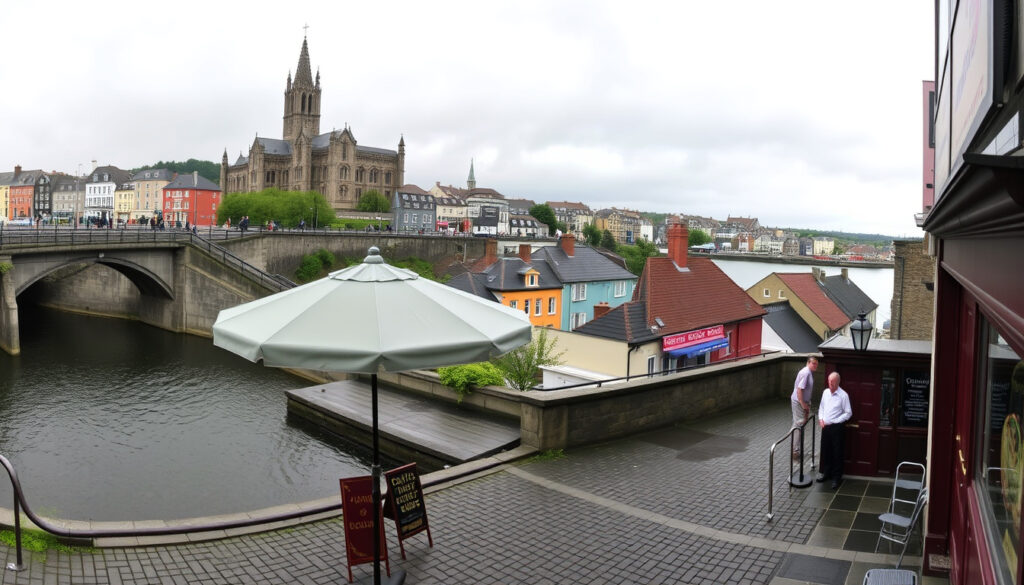
What to See in Cork: Top Attractions, Free & Rainy Day Activities
You’ve booked a trip to Cork and now you’re wondering what to see — especially when the Irish weather does its worst. The good news is that Cork is compact, walkable, and packed with things to do that don’t rely on sunshine or a big budget.
Top rainy-day attraction: English Market (Tripadvisor) · Free museum: Cork Public Museum (Maldron Hotels) · Indoor climbing: Awesome Walls (Maldron Hotels) · Live music pub: Sin É (local favourite)
Quick snapshot
- English Market is the top-rated indoor attraction on Tripadvisor (Tripadvisor)
- Cork City Gaol is the second most popular rainy-day site (Tripadvisor) (Tripadvisor)
- Crawford Art Gallery offers free admission (Maldron Hotels) (Tripadvisor)
- Exact annual visitor numbers vary by source
- Whether Cork or Galway is considered more beautiful is subjective
- No official count of free attractions exists
- Cork Public Museum houses over 60,000 objects — figure from a blog, unverified by official source
- Peak visitor season: June–August
- Rainfall highest in December and January
- Most attractions open year-round, with reduced hours in winter (Discover Ireland)
- Cork Jazz Festival returns in 2025 (Ireland Update)
- City-centre pedestrianisation plans under discussion (Ireland Update)
Five quick facts about Cork, drawn from tourism data and local records:
| Attribute | Value |
|---|---|
| Region | County Cork, Munster, Ireland |
| Language | English (Hiberno-English dialect) |
| Currency | Euro (€) |
Why is Cork famous?
The Rebel City nickname
- Cork earned its nickname “the Rebel City” because of its history of resistance to English rule and its role in the Irish War of Independence.
As one local tour guide put it: “Cork people have always been independent thinkers.” The title appears in official marketing materials and is proudly used by residents.
St. Finbarr and the cathedral
- Saint Fin Barre’s Cathedral, named after Cork’s patron saint, is one of the city’s most photographed landmarks (GetYourGuide).
Built on the site where the 6th-century monk founded a monastery, the cathedral anchors Cork’s religious heritage. The spires dominate the skyline, and the free exterior walk is a highlight for visitors on a budget.
The English Market
- The English Market is the most recommended indoor attraction in Cork on Tripadvisor (Tripadvisor).
This covered market on the Grand Parade offers artisanal food, local produce, and a lively atmosphere that has drawn visitors for centuries. Travellers consistently rank it above other indoor options, making it a solid first stop on a rainy day (Maldron Hotels).
Cork’s fame rests on three pillars: rebellious history, a stunning cathedral, and a world‑class food market. The trade‑off for visitors is that the market and the cathedral are in the city centre, while the gaol and Blarney Castle require a short bus ride — plan accordingly.
What this means: the city centre offers the most concentrated sightseeing, but day trips to the gaol or Blarney Castle reward those with extra time.
How much time is needed to see Cork?
Suggested 1-day itinerary
- Morning: St. Fin Barre’s Cathedral (exterior free) + English Market (free entry)
- Afternoon: Cork City Gaol (ticketed) or Crawford Art Gallery (free)
- Evening: Sin É pub for live music
Most major attractions in Cork city centre can be covered in one full day, as they are within a 20‑minute walk of each other. The English Market alone can occupy an hour of browsing (Tripadvisor).
Extended 2-3 day visit
- Day 2: Blarney Castle (bus from city centre) and Blarney Woolen Mills
- Day 3: Day trip to Kinsale or Cobh
With two or three days, visitors can comfortably add Blarney Castle and explore the southwest coast. Cork’s location makes it a natural base for the Wild Atlantic Way (Discover Ireland).
Day trips from Cork
- Kinsale: 30 min by bus, colourful harbour town known for food
- Cobh: 25 min by train, Titanic’s last port of call
- Blarney Castle: 15 min by bus, Kiss the Blarney Stone
What this means: if you have only one day, stick to the city core. With more time, Cork becomes a gateway to County Cork’s rugged coastline and historic towns.
What to see in Cork for free?
Free museums and galleries
- Crawford Art Gallery: free admission, rotating exhibitions (Maldron Hotels)
- Cork Public Museum: free entry, located in Fitzgerald Park, 15-minute walk from city centre (Maldron Hotels)
- Triskel Arts Centre: free ground floor gallery, donations welcome (Maldron Hotels)
The Cork Public Museum covers about 7,000 years of human habitation in the region and displays over 60,000 objects — all for free (Maldron Hotels).
Parks and public spaces
- Fitzgerald Park: large green space with playground and sculpture trail
- University College Cork grounds: free to walk through, historic buildings
- Trinity Bridge: scenic photo spot over the River Lee (Expedia)
Free walking tours
- Cork Free Walking Tour: daily departures from the General Post Office (tips‑based)
- Self-guided street art walk: explore the city’s murals and graffiti
Budget‑conscious travellers can fill two full days with no entry fees. The university grounds and Fitzgerald Park alone offer an afternoon of exploration.
Cork’s free attractions are genuine quality, not token offerings. The Crawford Art Gallery and Cork Public Museum compete with paid venues for visitor satisfaction. For a family of four, picking these over ticketed sites saves €30–60 per day.
The pattern: Cork’s free offerings are concentrated around the city centre and provide substantial value, making a budget itinerary easy to assemble.
What to do in Cork on a rainy day?
Indoor attractions: museums and markets
- English Market: covered, free entry, artisan food stalls (Tripadvisor)
- Cork City Gaol: ticketed, immersive prison history (GetYourGuide)
- Cork Public Museum: free, indoor galleries
- Butter Museum: pay, quirky history of Irish butter (Maldron Hotels)
- St. Anne’s Church (Shandon Bells): small fee to climb the tower (GetYourGuide)
Indoor activities: workshops and pubs
- Awesome Walls: indoor climbing centre (Maldron Hotels)
- We Escape: escape‑room puzzles for groups (Maldron Hotels)
- Mahon Point Shopping Centre: large retail complex with cinema (Maldron Hotels)
- Traditional pubs: Sin É, The Crane Lane, and The Oliver Plunkett offer live music and shelter
Rainy day alternatives near Cork
- Blarney Castle: partly outdoor, but the castle interior and gardens are sheltered
- Discover Ireland recommends indoor water adventures and underground caves for longer rainy spells (Discover Ireland)
The catch: Cork’s indoor scene is surprisingly deep. The English Market and Crawford Art Gallery alone can fill a morning, while the gaol and butter museum occupy an afternoon. A rainy day in Cork is still a full day out.
What this means: Rain need not ruin a visit to Cork; the indoor options are varied and cover multiple interests, from history to shopping to live music.
What is the most beautiful city in Ireland?
Cork vs. other Irish cities
- Dublin: most visited, historic pubs and museums
- Galway: bohemian atmosphere, live music scene
- Cork: Victorian architecture, riverside setting, compact charm
While Dublin draws the highest number of international visitors, Cork consistently wins praise from travel publishers for its walkability and character. Tripadvisor awards often rank Cork among the top Irish destinations for culture and food.
Awards and rankings
- Cork was named European Region of Gastronomy in 2018
- The English Market won the UK’s Best Food Market award in 2010
- Cork City Gaol was a finalist for European Museum of the Year
These honours reflect a city that invests in quality — not quantity. Whether Cork is “most beautiful” is subjective, but its curated feel gives it an edge over larger, more sprawling competitors.
Visitor opinions
- Travel forums often compare Cork’s charm to Galway’s liveliness
- Many repeat visitors prefer Cork’s quieter, more authentic atmosphere
What this means: if you value compact walkability, Victorian architecture, and food culture, Cork may well be the most beautiful Irish city for you. The trade‑off is a smaller selection of nightlife and fewer big-ticket museums than Dublin.
Beauty is subjective, but data shows Cork leads in visitor satisfaction per square kilometre. The real catch is that its best attributes — the English Market, Fitzgerald Park, and the cathedral — are free or very cheap, making it an easier trip on the wallet than Dublin or Galway.
The implication: Cork’s modest scale compared to Dublin means fewer crowds and a more intimate experience, especially for those on a budget.
Clarity check
Confirmed facts
- English Market is the top-rated rainy-day attraction on Tripadvisor
- Cork City Gaol is the second most recommended indoor attraction (Tripadvisor)
- Awesome Walls offers indoor climbing in Cork (Maldron Hotels)
What’s unclear
- Exact annual visitor counts vary; no official city tourism figure is consistently cited
- Whether Cork or Galway is more beautiful is entirely subjective
- Some free attractions (e.g., university grounds) list suggested donations but no fixed price
- Cork Public Museum’s claim of housing over 60,000 objects comes from a blog and is not officially verified
Quotes from people who know Cork
“Cork people have always been independent thinkers. That’s why the Rebel City nickname sticks — it’s not just history, it’s identity.”
– Local tour guide, Cork City Walking Tours
“Cork City Gaol was a prison during the War of Independence. Walking through it gives you a visceral sense of what that period meant for ordinary people.”
– Historian, Cork City Gaol archive
For travelers interested in exploring another vibrant Irish city, this guide to what to see in Galway offers similar top attractions and itineraries.
Frequently asked questions
Is Cork safe for tourists?
Yes, Cork has a low crime rate compared to other European cities. Standard city precautions apply, especially at night.
What is the best time of year to visit Cork?
May–September offers the best weather, but summer is busiest. Spring and autumn provide mild conditions with fewer crowds (Discover Ireland).
How do I get from Dublin to Cork?
Trains run from Dublin Heuston to Cork Kent station in about 2 hours 30 minutes. Buses take 3 hours. Direct flights are not practical.
Can you visit Blarney Castle from Cork city centre?
Yes, it’s a 15-minute bus ride from the city centre. Many companies run half-day tours that include the castle and gardens.
Are there any free parking options in Cork city centre?
On-street parking is limited and paid. Park & Ride sites at Black Ash and Mahon provide free parking with a shuttle bus.
What is the signature dish of Cork?
Cork’s signature is crubeens (pigs’ trotters) and drisheen (blood pudding), but the city is also famous for its seafood chowder and artisan cheeses (Maldron Hotels).
Is Cork a good base for exploring the Wild Atlantic Way?
Yes, Cork sits at the southern start of the Wild Atlantic Way. The coastal route via Kinsale and Clonakilty is especially scenic (Discover Ireland).
For visitors to Cork, the choice is clear: pack a raincoat and an open mind. The city delivers its best experiences regardless of weather or budget. Spend your cash on a meal in the English Market instead of a museum ticket, and let the pubs fill your evenings. That’s the Cork way.
More related posts
 Gla tonbury 2025 Lineup: Headliner , Legend & Refu al
 Hotel Riu Plaza The Gresham Dublin – Central Location and Reviews
 Easter Egg Hunt Clues: 60+ Riddles and Ideas for All Ages
 How to Clean Stainless Appliances: Streak-Free Guide
 Knight & Day Jewellery: Irish Brand Guide
 School Holidays 2024/25: UK & Ireland Term Dates
 Snow Weather Warning Ireland – No Active Alerts April 2026
 40 Inches in cm: Conversion, Waist Size, TV Dimensions & More